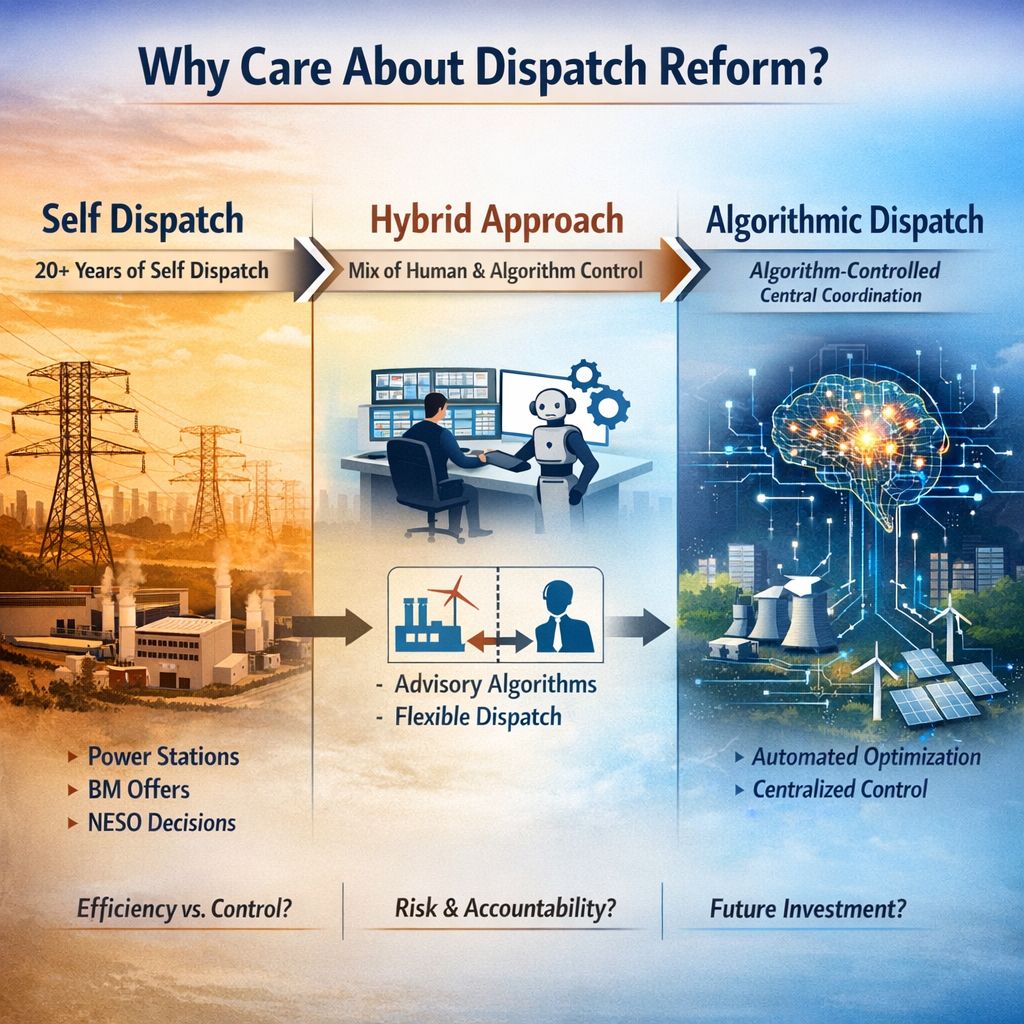
Under today’s Self Dispatch system power stations tell the NESO control room when they plan to run. They also provide costed offers not to run or to produce more into the Balancing Mechanism market.
This process has served us well for over 20+ years, but this system is beginning to creak.
The number of daily actions in the Balancing Mechanism has gone from tens to thousands, through issues such as skip rates decision making in the control room is coming under scrutiny, and curtailment costs could be £12b in 5 years’ time. The BM was designed for exceptions; it’s now the norm.
Alternatives to this are under discussion and a hybrid approach is mentioned in the latest NESO consultation.
We could go back to the 1970s and have the control room tell power stations when to run, this is Central Dispatch. This is almost a trigger word for many in the industry; it comes with connotations of loss of commercial revenue control and investor uncertainty.
The hybrid model is part of the measures in the NESO consultation designed to give the control room greater visibility of the current state of the system and market. Together with the Reformed National Package as part of REMA this may help the control room get increased visibility and control over assets.
We now live with a dynamic and flexible system, which starts to break our previous control assumptions. A possible future could be Algorithmic Dispatch where all players cede control to local and central algorithms that must abide by defined rules, these could provide advice or take action.
The advantage of Algorithmic Dispatch is its ability to cope with the volumes that the future will bring, but taking humans out of the loop is not without its own risks, advice should be a first step.
The current system has a limited lifespan the future is less clear.