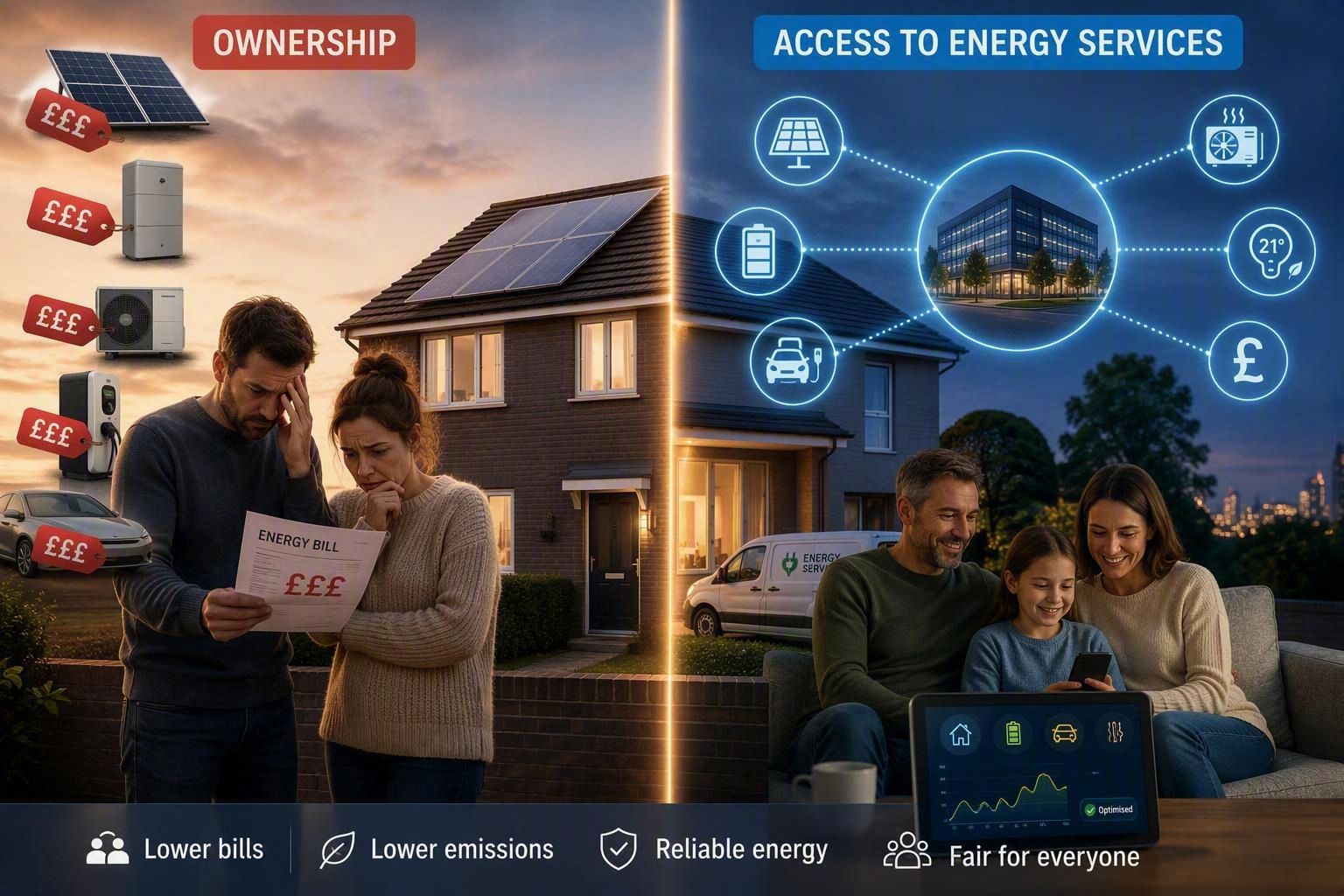
The lowest bills are sent to people who can afford the thousands of pounds needed to own the solar panels, batteries, and heat pumps.
If access to the lowest energy costs depends on owning thousands of pounds of equipment, is that really a fair energy transition?
The cheapest energy is available to the people who can afford to own the assets that produce, store and optimise it, then is it fair that we all pay the same? Also, if we accept that energy is a basic human need then surely the family in fuel poverty should be protected from having to make heat-or-eat decisions?
The current assumption is that homes will decarbonise because millions of homeowners become infrastructure investors, reducing their fossil fuel dependency by generating and controlling electricity with assets they own – heat pumps, solar, batteries. There are generous subsidies and tax breaks for ownership.
This isn’t very fair on those on low incomes or those living in rented accommodation – even if they had the money there is no incentive for them to add an asset to a house that someone else owns.
We should keep in mind that our objective is decarbonising homes rather than creating a middle class of low carbon asset owners.
If we changed our mindset from asset ownership to access to energy services we might get to different, and better, answers.
Many wouldn’t realise that their meter is neither owned by themselves or their energy retailer. The metering part of our industry solved this decades ago by separating ownership from use. Today most meters are owned by specialist asset ownership companies.
The same could be true of other assets like batteries. The asset company rather than the owner, tenant or landlord funds the asset and they get a lease fee from the billpayer. This is already happening with EVs where around 75% are leased or financed.
Moving to a leasing service model could make the transition significantly fairer because access would depend on the attractiveness of the offer and the occupier’s willingness to participate.
The fairest energy transition is not one where everyone owns low-carbon assets. It is one where everyone can benefit from them, regardless of who owns them.