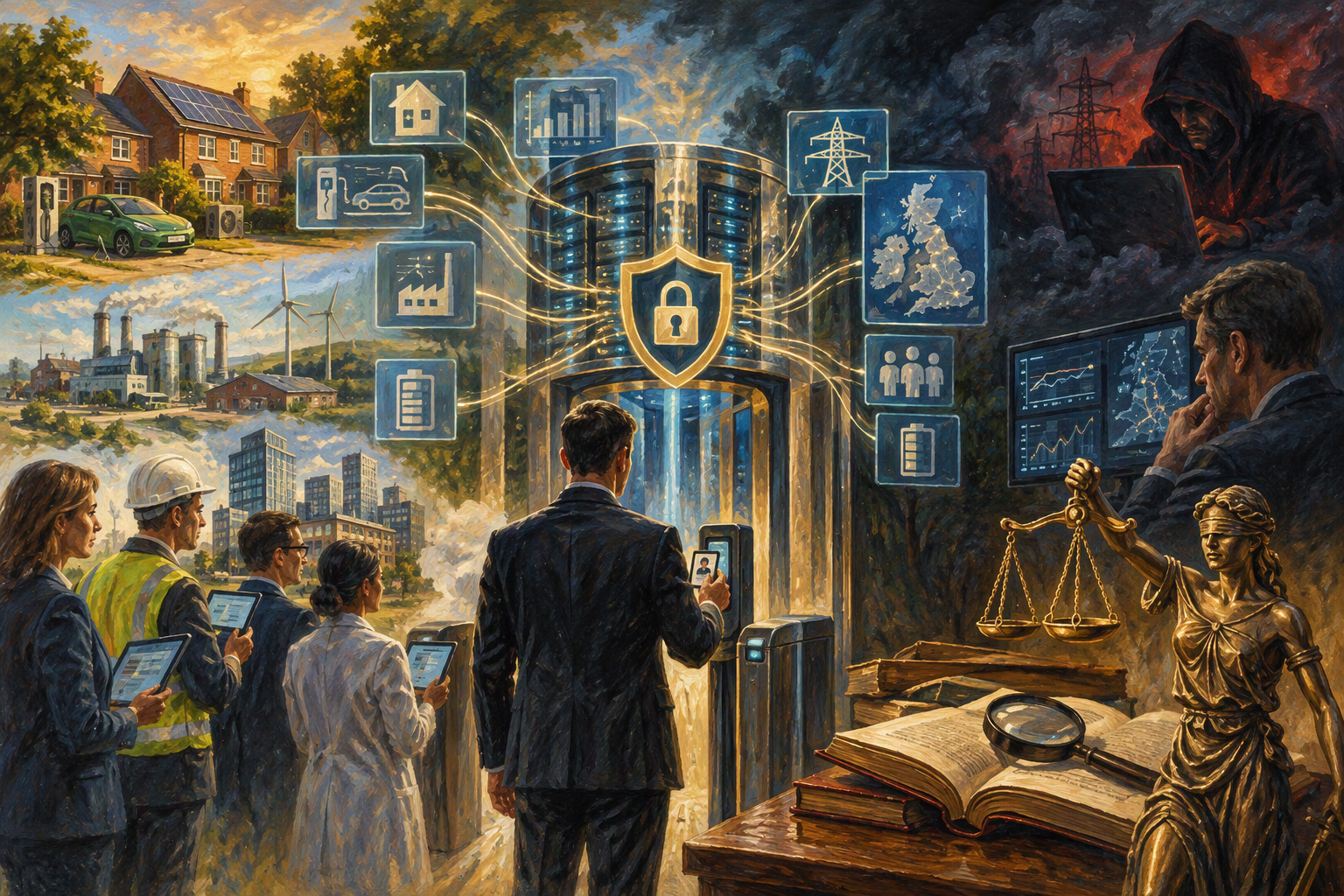
There are efforts underway to improve data sharing across the energy system, aimed at creating the ‘Digital Energy Spine’. These are in the foothills, but good progress is being made. Trust is central to the current frameworks; prove who you are, and why you legitimately need the data, then you’re allowed to access it.
The prize for improved data sharing is significant; better designed networks, a system that is cheaper to run, better supported consumers, and a greener system. Transparency and governance can prevent mistakes, shine a light on corruption, and exposes hidden agendas. Better information leads to better decisions.
But this isn’t without risks…
Recent cyber incidents show that organisational boundaries are insufficient to protect data; providing a detailed network map to a trusted asset developer doesn’t prevent someone finding vulnerabilities in the network and sharing it with someone who will exploit them.
Sharing customer vulnerability data with a small set of trusted users does not itself prevent someone using this information to target that same community.
A battery operator with a complete view of the state of the system should use this information to make rational economic decisions that do not destabilise the market, but this is not guaranteed.
Some guards are already in place:
We’ve already adopted many designs that avoid large central databases in favour of hybrid or distributed systems, but expedience means that some remain which could be attractive targets. Validation of what is shared and for what purpose are already in place.
Being inside the Circle of Trust should not be the end of the story, surveillance is needed to tell us what you did with the information. Governance and trust are insufficient to protect the future that we are heading to: we need decision-level auditability.
We can learn from banking; rigorous qualification and fitness checks for participants, strong and unambiguous rules on what is allowed, all backed with accountability, sanctions, and auditability.
Without this we will inadvertently create vulnerabilities and opportunities for exploitation whilst trying to do the right thing. While sharing as much data as possible to make the system more efficient but not creating an inner circle of a few with excellent information able to avoid scrutiny.
Trust, but verify.