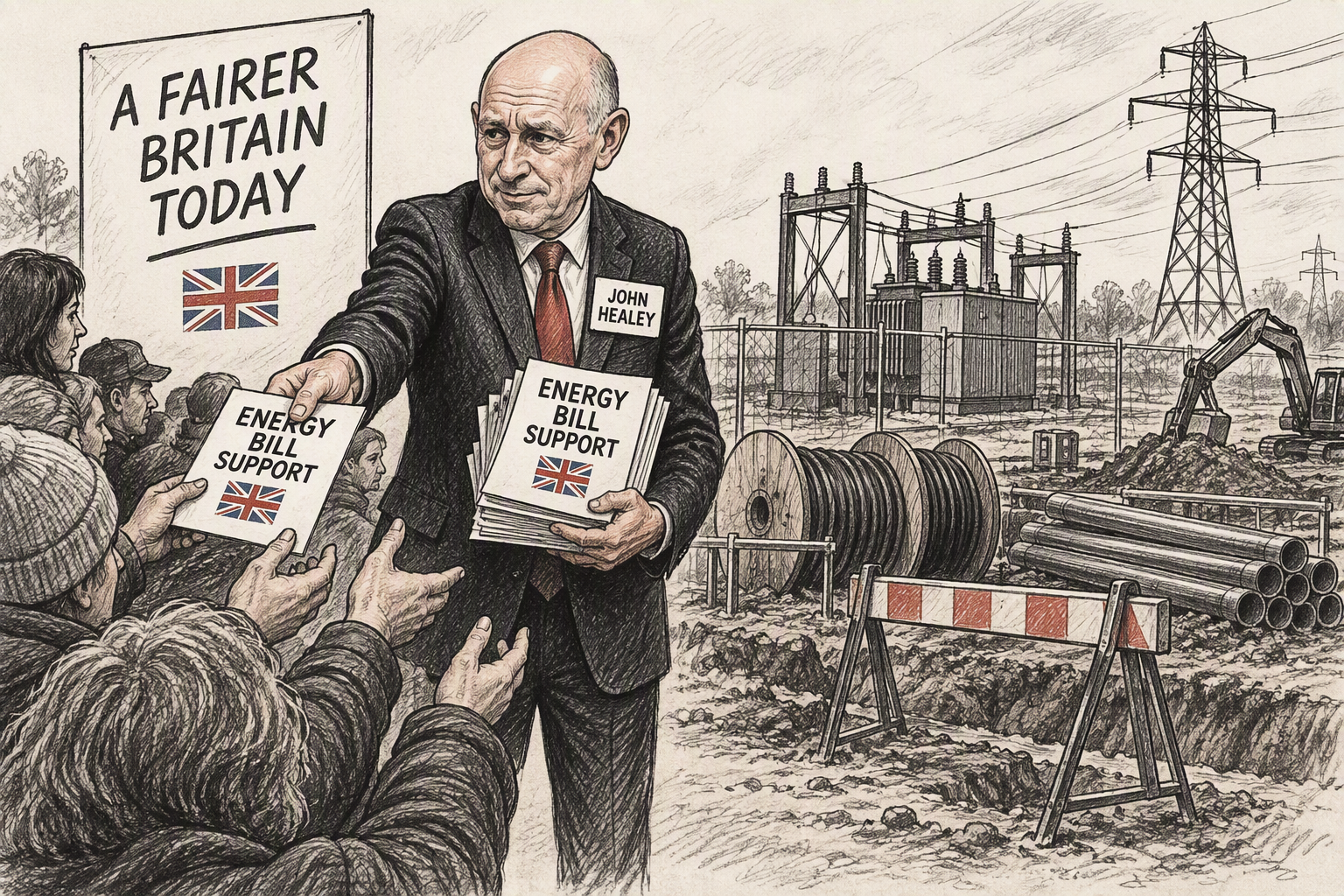
The Help to Households package announced on Wednesday will take £2.6bn off total energy costs.
In the UK, we use just less than 300 TWh of electricity per year. About 35% of this is used in homes, 30% by industry, 25% by businesses, and the remaining 10% is mostly transport and agriculture. Using DESNZ data and quarterly energy price stats, the total UK electricity bill currently sat on John Healey's desk comes in at around £70bn.
If our energy prices were the same as Finland, where electricity is the cheapest in Europe, it would reduce to £30bn. If our energy prices matched the European average, it would be £55bn. Across Europe, savings range between £25bn and £40bn.
But why only look at Europe? The US is the largest single export market for the UK, cheap Asian imports benefit from far lower prices in their home markets, and if their energy is far cheaper than even Finland’s then we cannot hope to be competitive.
But cheaper electricity won't automatically drive growth or give the Chancellor more headroom or go to the bottom line of UK plc. This will take reinvestment of the savings and maybe we’re already seen as too expensive growth is heading elsewhere.
That said, there are still strong arguments against high electricity prices. They make us uncompetitive, they dissuade people from moving to a greener future, and, given the ownership structures of our energy system, a sizeable chunk of the profits leave the UK.
Ultimately, we need systemic re-design of our electricity system which, right now, has high costs baked in.
At current rates, in the remaining 23 years to 2050, we will spend £1.6 trillion pounds on electricity. We must find headroom within this to invest in smarter grids, renewables, storage, and nuclear to create a system where the costs are as low as they can be.
Perhaps in the next decades people will wish that the £2.6bn had been spent on better infrastructure?