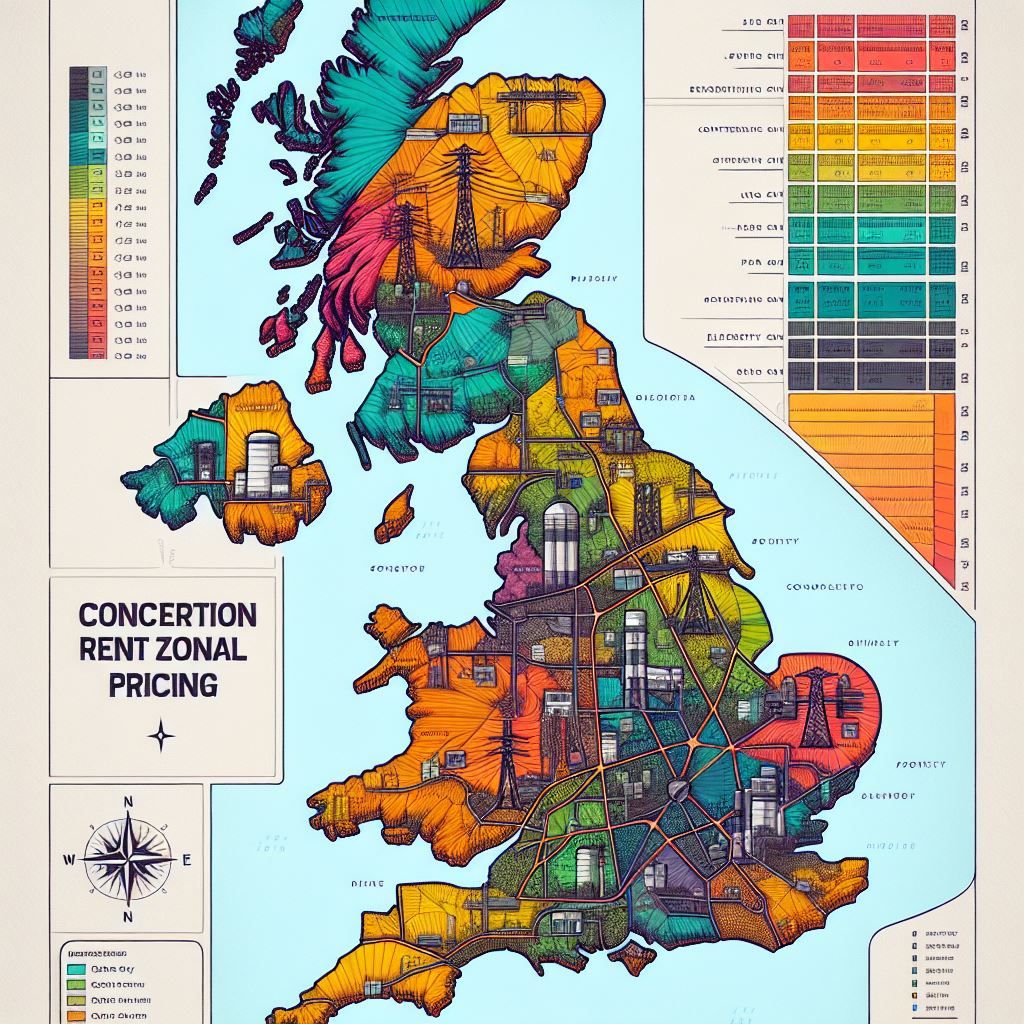
There is a much-anticipated UK government announcement due in the next few weeks on Zonal Pricing (ZP). The concept of Congestion Rent is at the heart of ZP. Put simply, this is the surplus money left when the market operator buys electricity cheaply in one zone and sells it for a higher price in another.
Under ZP there is a different price in each zone. For example, £30 MWh in Scotland and £45 MWh in Manchester. The Market Operator makes Congestion Rent of £15 MWh by selling cheap Scottish Electricity in Manchester. Under ZP everyone pays and receives the price of electricity in their own zone. Of course, the reality is more complex than this, perhaps another week’s topic.
In a perfect transmission system with no constraints there wouldn’t be any Congestion Rents as the price in all zones would be the same.
There’s also an assumption that electricity will generally be flowing from cheaper sources to more expensive markets. If the reverse were true, as could happen, the Market Operator would make a loss from selling expensive electricity into a cheaper zone.
A key question in ZP market design is what to do with the Congestion Rents. The standard answer is that these are used to provide hedging to generators who need to protect themselves from cross zone price differences when they have sold forward electricity on the assumption of a price difference which may turn out to be different.
Other uses of Congestion Rents include funding the reinforcement of the grid to reduce the constraint, here the market and system operators are incentivised to work with the transmission operators to build new lines.
A ZP market will typically have some from of consumer protection, sometimes called Demand Shielding, and Congestion Rents could be used to provide the buffer that prevents wildly different prices at each end of the country.
The cost of balancing the UK electricity system from paying, typically wind, generators to stand idle, and paying, typically gas, generators to produce runs to billions of pounds. Congestion Rents could be a source of funding for this as an alternative to the Balancing Services Use of System charge which is levied on consumers today.
This just one of the points that will need to be designed if the UK opts for a ZP based market.