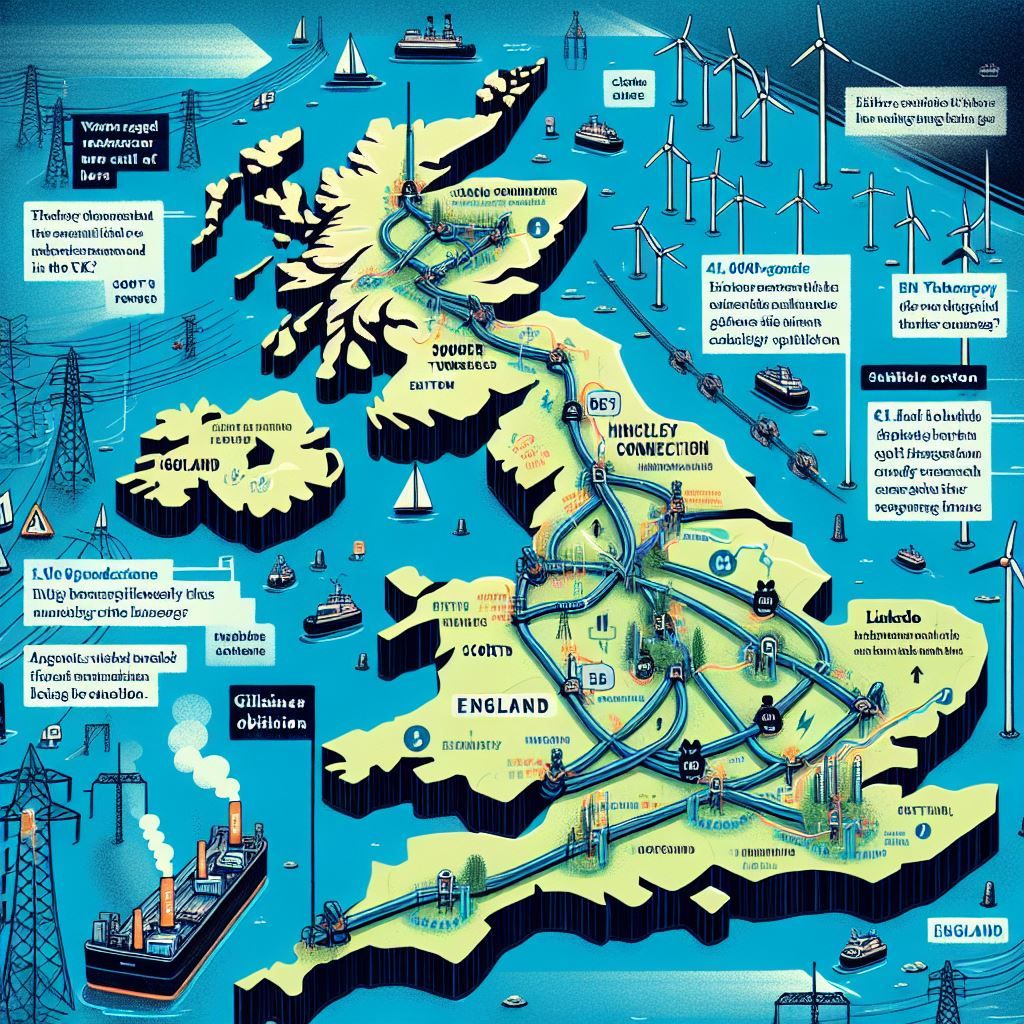
The Scottish operators have built over 1,000 km of new onshore transmission lines in the past decade, but there is a very different story in England where there have been very few onshore lines built:
The London Power Tunnels added 64km of circuits (mostly underground), and the Hinckley connection added 57km (mostly overhead) so a total of just over 100km. A decade ago, National Grid reported managing 14,000km of transmission lines, the number today is almost identical.
A large cause of the billions spent in increased balancing costs is due to the difficulty of getting wind power from Scotland to England across what is known as the B6 boundary. This currently has a capacity of 6 GW, when the capacity is reached Scottish wind farms are paid to switch off.
Offshore High Voltage lines have been the preferred method of strengthening the connection between Scotland and England. The Western link is already operational and an Eastern link which will increase capacity by 2 GW will be operational in 2033, potentially saving hundreds of thousands of pounds in curtailment costs every day.
The public are not supportive of onshore transmission lines and around the country there are many campaigns against them. The alternative of burying cables is, according to National Grid, several times more expensive. Campaigners argue that underground cables could be built today and the delays of having numerous planning arguments over overhead cables make this difference less stark.
Forecasts suggest that as we electrify our lives, we will need 2-3 time more electricity, and a lot of this needs to come from large wind farms connected to the transmission network, so we are going to need a lot more transmission kilometres.
But current progress suggests that something will need to be radically different if this is going to happen.