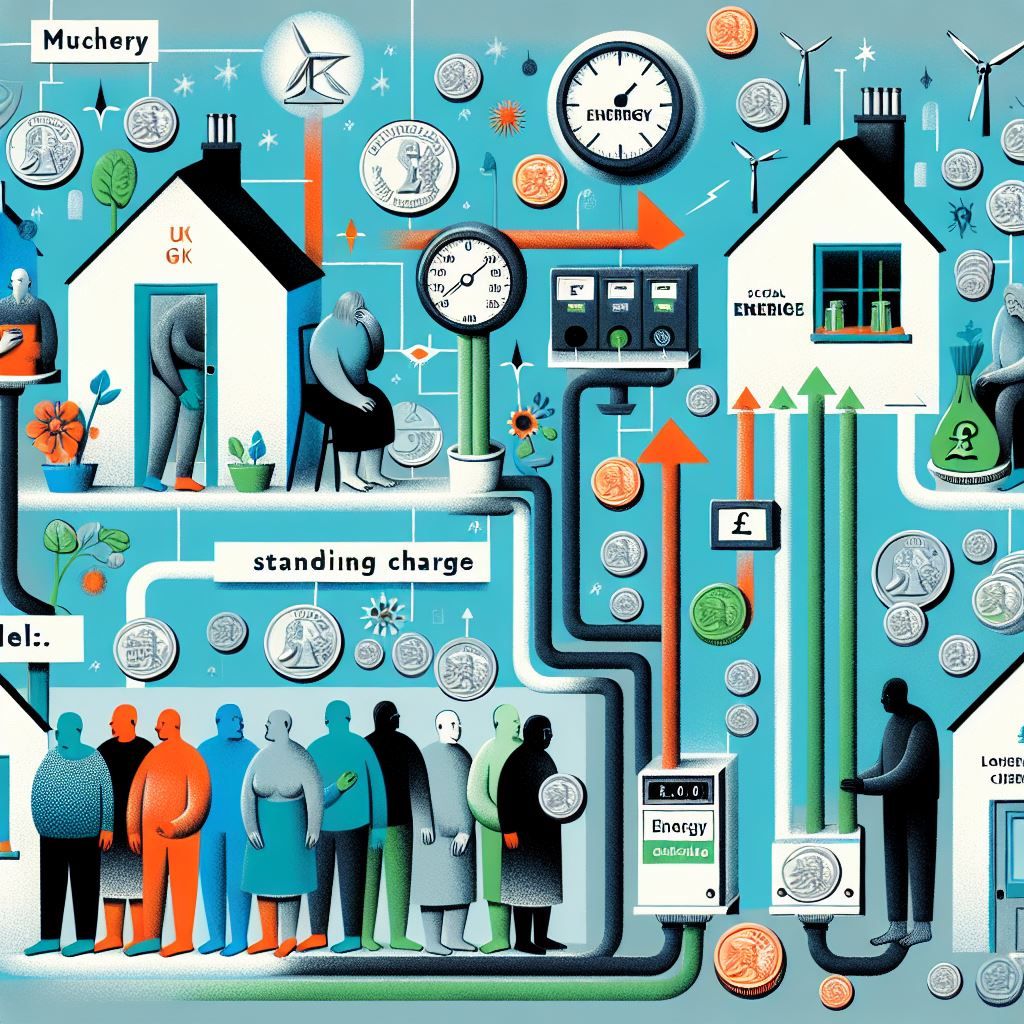
Last month Ofgem published a paper discussing whether we should adopt a new pricing model. There is lots of good content that discusses the role of renewables, the standing charge, how fixed and variable costs are managed, and how our use of energy is changing.
But the headline grabbing section relates to linking energy costs to ability to pay. Effectively cheaper electricity for poorer households, paid for by richer ones.
An option for this could be to use an income related standing charge as the mechanism to achieve this. The standing charge is currently over £300 per year, netting the industry about £9bn per year. If the 4.4m people that are higher rate taxpayers each paid £600 then this could take about £50 per year off lower rate taxpayers. To bring standing charges for lower rate payers down to £100 per year, it would have to be £1,500 per year for higher rate taxpayers.
Another option is to remove the standing charge completely and have all electricity costs as unit costs, so larger users pay more. This sounds more achievable, and Ofgem’s numbers show a saving for lower users, but for those in poor housing or with a medical need for electricity this could end up costing them more, so a safety net may be needed.
A further variant of this could be wealth based, probably based on council tax bands. But bigger houses use more anyway and there are lots of pensioners living in large expensive to heat homes.
It’s likely that as our electricity system transitions to be greener and more renewables based then the proportion of fixed costs will increase, with the actual cost of production reducing. Our bills need to change to reflect this.
My preference would be to bring domestic bills closer to the structures of commercial bills and have capacity and maximum demand components to provide the assets and network infrastructure, an energy change per kWh, and then a pollution charge based on the CO2 emissions created in producing the energy.