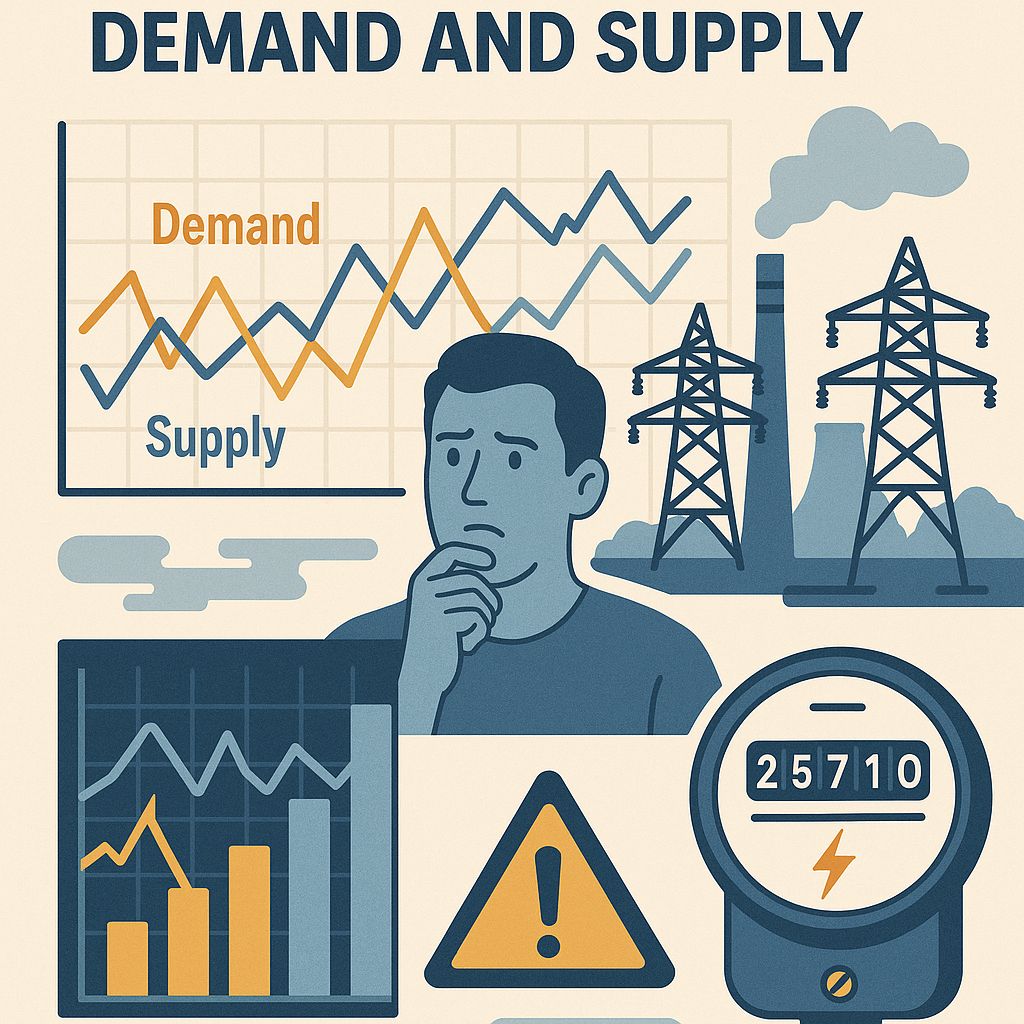
Recent events on the UK electricity system have been linked to forecasting errors. These were so significant that one day last week that over 1,000 corrective actions were required.
How did it go so wrong?
To protect the electricity system, we can’t under or over supply energy into the grid. If our demand or supply forecasts are out, then the gap between the two can grow into a major issue for the grid.
Robert Fitzroy founded the Met Office in 1854, with the first weather forecast being published in The Times in 1861, and people have been complaining about the accuracy of weather forecasts ever since. (Fitzroy is a fascinating character having been captain of the Beagle that took Charles Darwin on his adventures to develop the theory of evolution.)
A forecast error can take many forms, something can happen later or earlier than forecast, it can be higher or lower than forecast, or the event might not happen at all. Whilst our broad assumptions on how much sun and wind we will get in a year will be broadly correct, the energy system relies on today’s forecasts of tomorrow’s demand and supply being correct to the hour, minute, and second.
We’ve seen a UK hurricane when the weatherman denied its possibility just a few hours earlier.
The butterfly effect from chaos theory is also at play. Formally this is called ‘sensitive dependence on initial conditions’, it means that tiny changes in the starting state can have dramatic impacts on the eventual outcome. In forecasting terms, it makes it very had to accurately forecast more than a week ahead, this is true for any complex system – weather or energy use.
Introduction of weather based renewable energy is clearly a good thing for the planet, but it means that in the control room they are now handling two variable forecasts. 15 years ago the supply side was certain and dependable (firm as reliable generation is known) and the only variable was demand and even this is becoming harder to predict as lifestyles and work patterns become more diverse.
Our energy system cannot rely on forecasts to balance the system. We need a more resilient system that has greater storage, more rapidly available flexible services to match supply and demand, and more local solutions that dampen the overall impact of inaccuracies on the national picture.
Rather than blaming the forecasters we should take an umbrella with us.