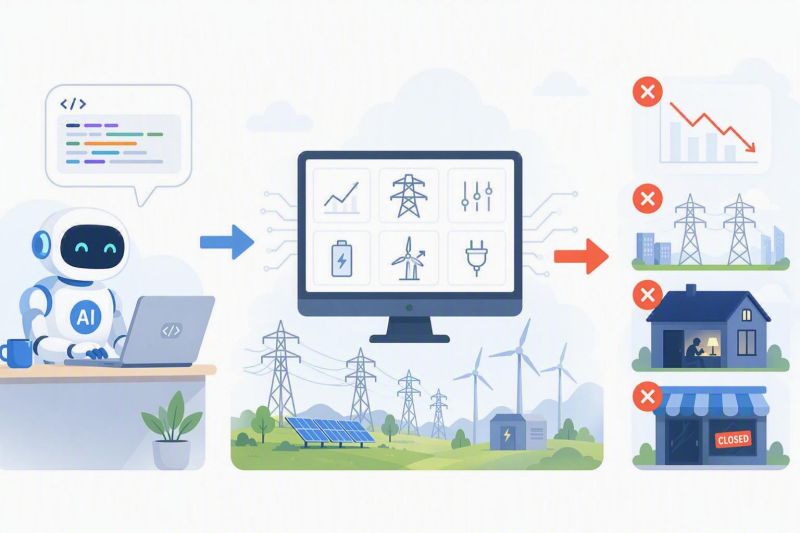
There’s been a lot of concern about introducing AI into the energy system. The EU AI Act categorises the energy system as high risk and sets very high standards to prevent issues. Last month Ofgem issued new guidelines for the ethical use of AI, and last week issued a consultation on AI Assurance.
AI has a major role to play in the future energy system, its ability to process data and language will result in a step change in the efficiency of the energy system.
Late last year Frontier Models like Anthropic Opus and OpenAI GTP 5 took a step change in their ability to code and build complex systems. These models can now build sophisticated tools across hundreds of use cases across system operations, asset management, and customer care. Many of these systems have limited AI built into them, they are classic compute models built by AI.
We now need to focus on two risks – the familiar decision-making risk, and now AI building systems that do the wrong things.
Requirements for core digital systems were defined when the human was writing and executing everything, now it’s possible to have AI do everything. It’s increasingly possible for a digital system to go-live without a human touching anything.
AI loves taking shortcuts; perhaps one of these leads to a generation scheduling algorithm that never crashes but it just quietly gets on making the wrong decision every time. The same could be true of market clearing prices, consumer bills, or asset maintenance frequencies. The energy system is highly connected with cascading risks.
This puts an even greater dependence on properly defining the constraints, context and rules that AI must follow when building digital systems. AI enabled coding is a complex engineering task that requires constant surveillance.
We’re in danger of regulating the tool that is used to build systems rather than the systems themselves.
We used to worry about biases in AI systems, we should now worry that AI has built something inherently unstable without us realising.