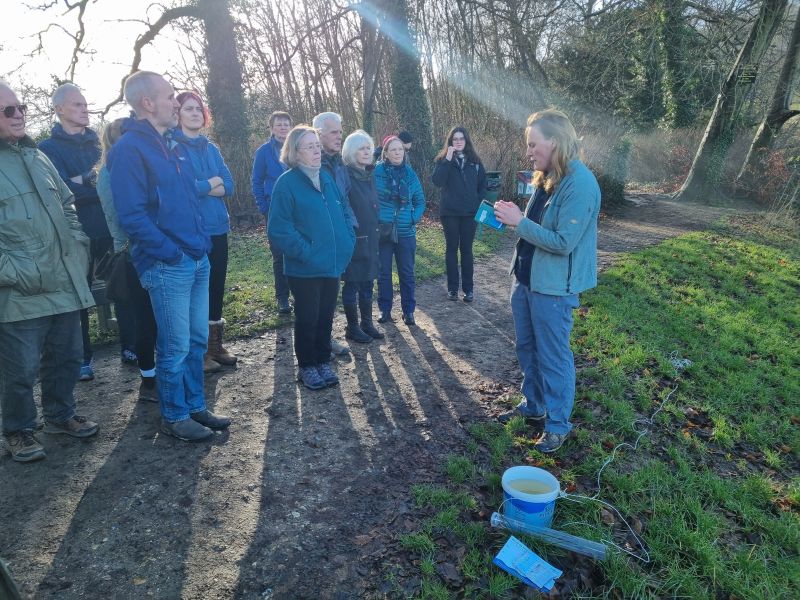
Last weekend I was trained by a charity, Thames21, on how to take river quality samples and report the results. I was part of a cohort of 25 people that will monitor our local stretch of the Thames. The information will form a richer picture on the state of the river and the causes of pollution.
This isn’t the only area where citizens can keep tabs on what is going on with our utilities.
I can also monitor the frequency of the National Grid using a smart plug or in my case a solar power diverter. The GB system controller, NESO, is required to keep the frequency of the system between 49.5 and 50.5 cycles per minute. My data shows that it is operating well within these limits.
In London Mapping for Change sees residents monitoring air quality in 30 locations across the capital. The project identified air quality issues, particularly in residential streets that were being used as ‘rat-runs’.
One of the most famous examples is the Rainfall Observers Network. Every day at 9am over 1,000 observers record the amount of rain in gauges near their homes and feed the data to the Environment Agency and Met Office.
GenerationSolar provides data from homes to researchers to improve installations and efficiency.
Not every project needs to be locally based. A project in Oxford is recruiting people to help identify rural homes in Sierra Leone, Kenya, and Uganda, with the aim of improving grid design.
The impact of each project is small, but the mobilisation of large numbers of people is significant, and should be a force for good.