We spend entire lifetimes’ of effort stressing over the rules that govern our electricity system. Perhaps we could let the system run itself?
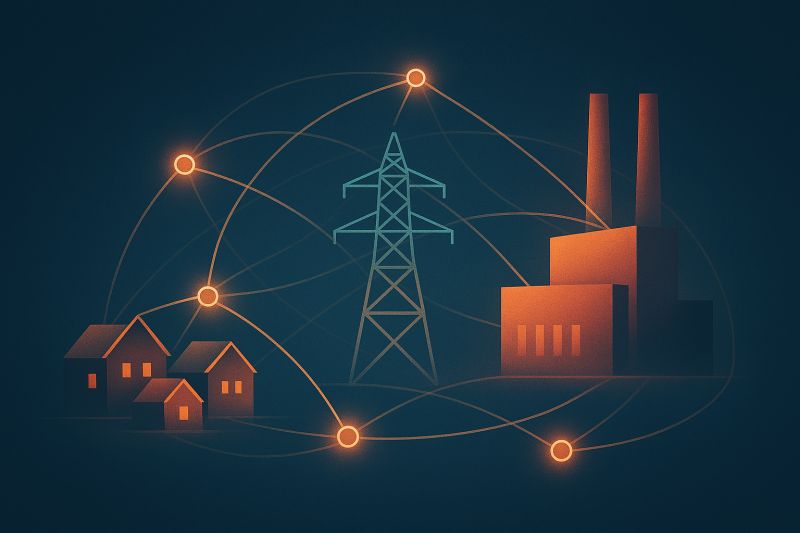
Imagine a simple three node system – house node, network node, power station node: The house asks the network for some power, the network node offers to supply this at a price, which the house accepts. The network asks the power station for power to supply to the house, and they also agree a price. Then the power is supplied.
Extend the system to have more power stations and more house the network can now optimise supply and demand. The network is incentivised to ensure that they can provide to all houses to maximise their revenue and profit.
The owner of the power station should be incentivised to offer power at the lowest possible price, so they generate more of the time and get higher returns. If they knew that the market was short of supply, they could set an artificially high price and make super profits. If there are enough power stations this market becomes liquid, helping to prevent market exploitation.
To allow the household to shop around, and because the energy system is in reality a lot more complex than this, Electricity Suppliers were created.
Can we be sure that this system will generate enough power for our needs? Maybe, but are we prepared to take that risk?
Regulation of these human based activities is what happened between 1990 and 2001 in the UK with privatisation, deregulation, retail competition, the supplier hub model, and then NETA, and more recently the creation of NESO as the system planner.
Today there are still humans in the loop at every step in this process. Without this we risk a runaway situation where an automated system behaves erratically, and we end up with unstable networks and markets. But the complexity of the system is reaching the limits of human control.
We need to urgently start to design regulation for this more automated system, agreeing what controls we need, and how will we enforce them?