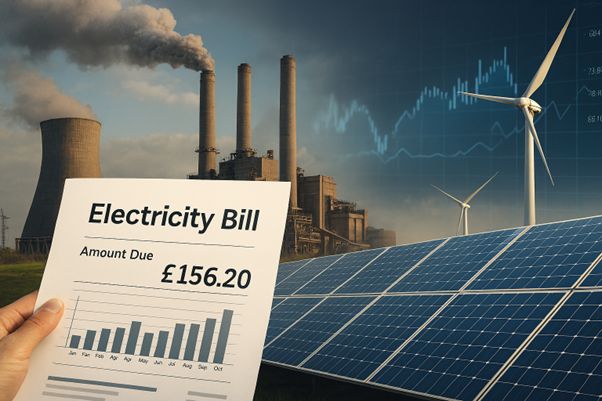
The UK has the highest energy bills in the world, impacting the economy, people are in debt, and in fuel poverty.
We continue to build an energy system with high costs baked in.
A report from Aurora for RWE showed that if the CfD strike price was set at £94 MWh then we could get all of the wind that we wanted. The nuclear plant Hinckley Point C under construction has a strike price of £127 MWh in today’s numbers. This compares to market spot prices that are around £75 - £85 MWh on average since prices stabilised after the energy crisis caused by the Russian invasion of Ukraine.
Gas generation is a potentially cheaper source of energy, but we have only built one gas fired station in the past 10 years and most are 20 years old, and we’re using them more in ‘peaking mode’ which is more expensive. Gas generation creates CO2 emissions but had we aggressively reduced domestic emissions we could have had lower overall national emissions.
NESO said this week that, if the energy transition is well managed, energy costs could roughly halve as a proportion of GDP by 2050. A condition for this is investment of £28bn per year, roughly equivalent to £1000 per household. They are saying ‘invest for the next few decades and then prices will fall’. Figures from the Committee on Climate Change suggest that the investment needs to be twice this.
The budget announcement of moving around £150 of costs away from bills and into taxation helps, but has limited overall economic impact, and there is a risk that it reduces investment in insulation for those same low-income groups.
Perhaps we should rather focus on removing fuel poverty, accepting that access to sufficient energy is a basic human right, and accept that most people should pay more. Earlier in the year I calculated that this would cost £1.2bn per year, around £50 per household to do this.
Ed Miliband made a commitment that a renewables-based system would reduce bills by £300, it’s increasingly hard to see how this will be achieved.