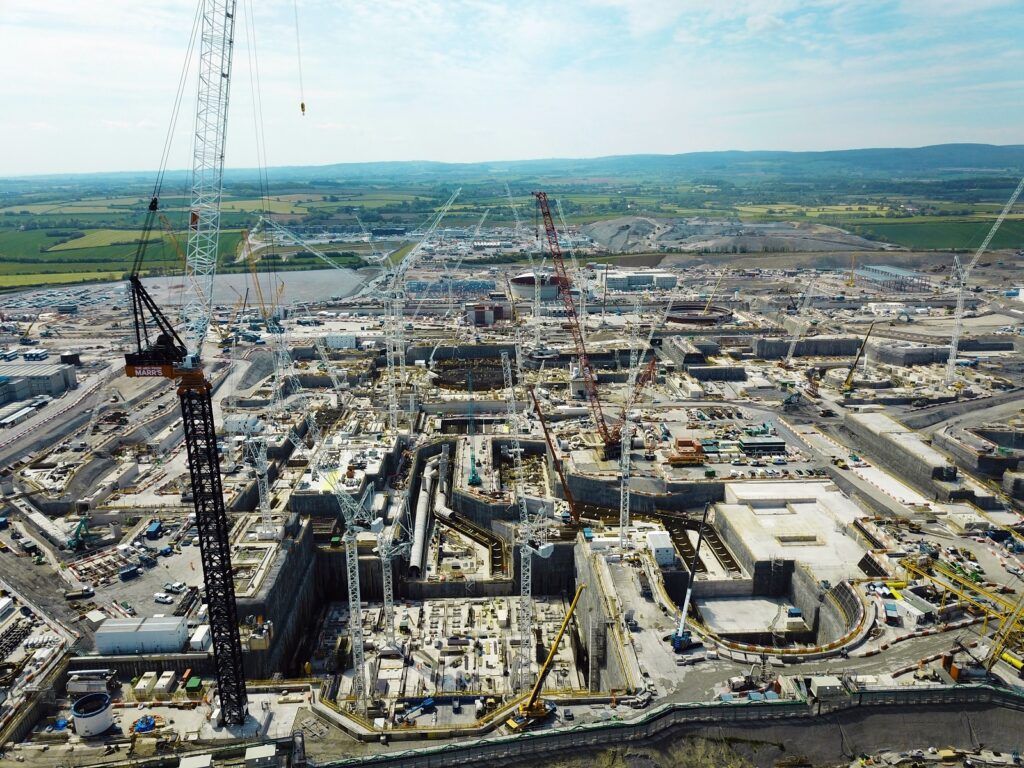
This week EDF released a revised cost and timeline for the Hinckley Point C nuclear power station, the cost is now £46bn and it’s expected to start producing around 2030.
How should we consider these costs?
£46bn divided by the operating capacity of HPC of 3.2GW is roughly £14m per MW. This is at least 10 times the per MW cost of offshore wind or Gas Fired Generation. This looks extortionately expensive and asks the question why we would ever consider nuclear.
The UK is roughly a 200GW economy, meaning our average energy use at any time is 200GW, this includes electricity and fossil fuels like petrol.
The UK has around 80GW of electricity generation capacity which runs about 50% of the time, contributing 40GW or around 20% of total energy. If we decarbonise then we are going to need a lot more electricity capacity.
The UK target is to get to 30GW of offshore wind capacity by 2030, with a load factor of around 30% this means that Offshore wind will then meet around 5% of the UK’s energy needs. If we had more wind, we would still need to worry about what to do on a day without wind.
Batteries will not solve all of this for us. The cost of batteries to store just one day’s wind production in 2030 will be £150bn. It is not realistic to affordably store energy and only rely on wind and solar. It would be cheaper to build more nuclear power stations for the still days and have the power 24x7.
Does this make nuclear a good deal?
One off and first of its kind projects are always expensive. With a fleet approach the costs may stop increasing and the estimates be more reliable. Then we can make a better evaluation of what will be the true costs of the energy transition.