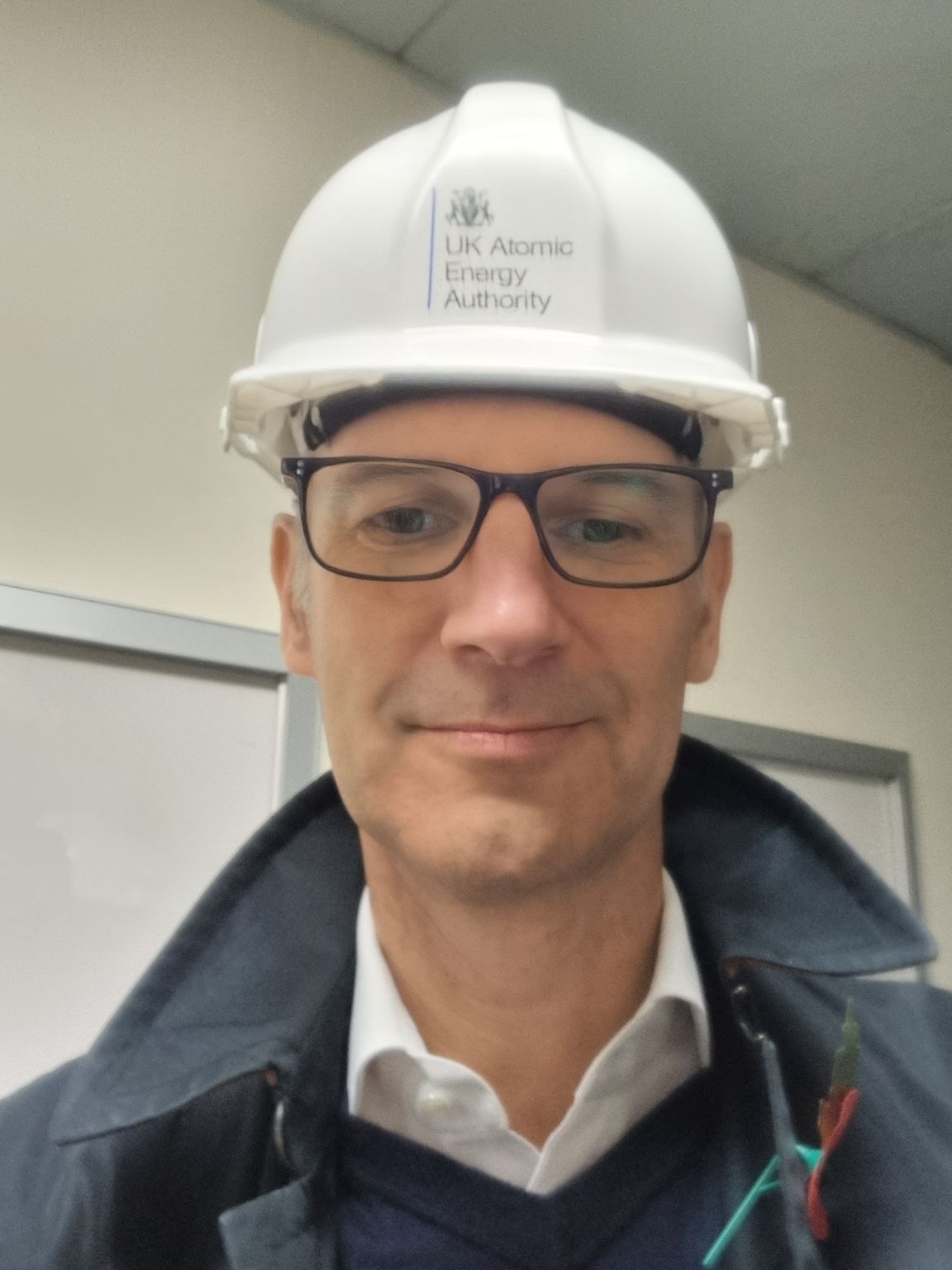
A fascinating visit this week to the UK Atomic Energy Agency at Culham in Oxfordshire: 2,400 people working to build clean energy for our future. They are a mix of physicists, engineers, economists, and are all deep thinkers and problem solvers. The JET reactor at Culham has been running for 40 years, it’s about to enter the decommissioning stage where even more learning will be gained.
In Fusion hydrogen atoms fuse to create helium and release energy in the form of a ‘highly energetic neutron’. All current nuclear power stations are fission rather than fusion based – they work by splitting large atoms into smaller ones releasing energy.
Fusion’s fuel is the most abundant substance in the universe, it’s intrinsically safe as it wants to slow down rather than speed up, and the radiation and waste produced is much easier to handle. Perhaps for this reason the UK Energy Act says that Fusion does not need a nuclear site licence.
A big challenge for Fusion is how to scale up. The ITER project in France will focus on managing the super-hot plasma. The UK’s STEP programme will focus on the practicalities of building a working power station. About 40 private companies also focus on Fusion, three of which have funding over $1bn.
The materials inside a viable Fusion power station reactor will be subjected to neutron radiation for many years, we currently don’t have an easy way to test what will happen to them, so a lot of Culham’s work in in the materials space. Creating the skilled workforce is another challenge, in a world where everyone needs scientists and engineers, these skills are also needed throughout the Fusion supply chain. We need to create a regulatory framework for Fusion, what are the requirements and standards, what are the risks, will it be public or privately funded? We saw yesterday how every process in Culham produces vast amounts of data, how will this be analysed and managed?
Will we need a dispatchable green baseload in the second half of this century?
I strongly believe that we will, wind and solar will not fill the energy gap left by fossil fuels. Fusion is the future of nuclear energy and whilst we need to get on and build more traditional Fission plants, we need a safer more sustainable fuel source to leave to the next generations.