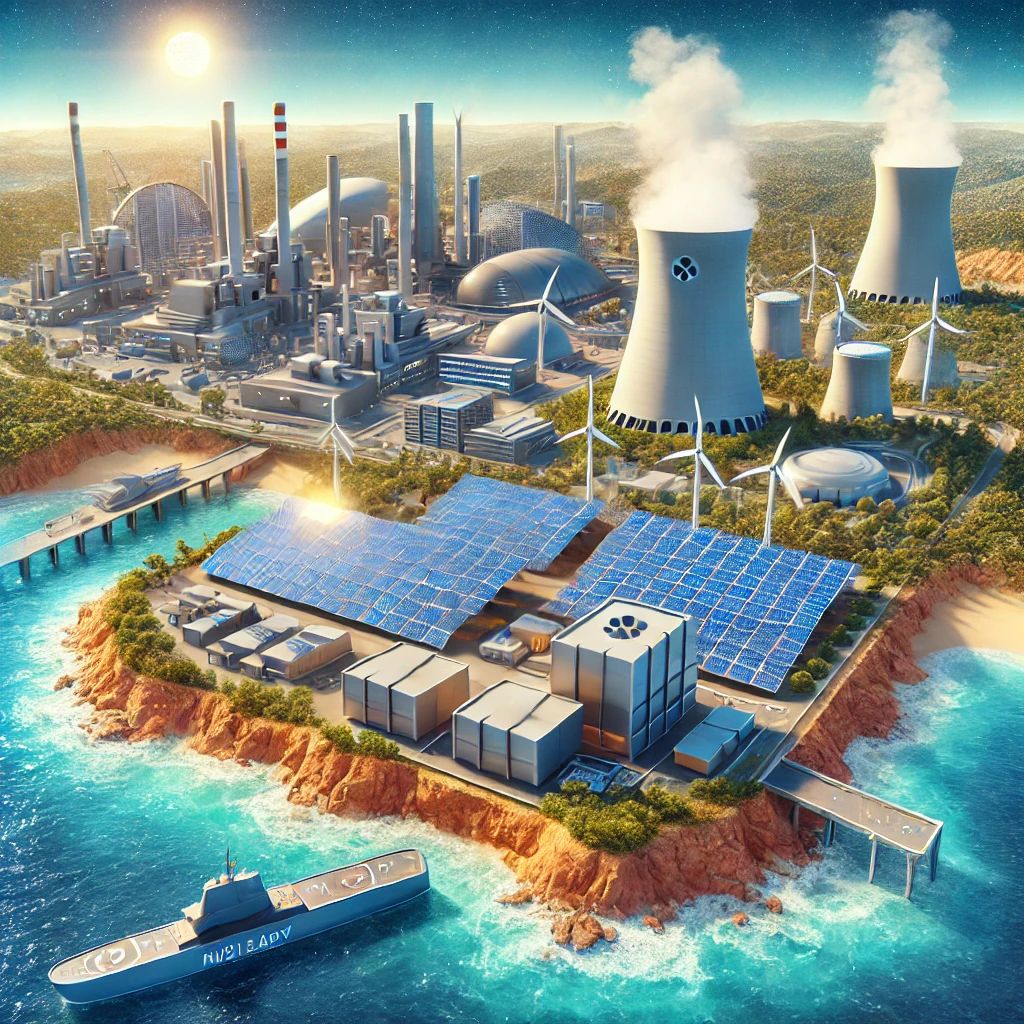
There is only one nuclear reactor in Australia that produces isotopes for medical use. The country holds one third of the world’s uranium, with three operating mines. In 2021 Australia signed a joint deal for nuclear powered submarines to replace existing already nuclear-powered subs. But for 25 years it has had a legal ban on nuclear-powered electricity generation. Australia does everything with nuclear except use it for electricity generation.
There’s a furious and emotional debate raging on whether Australia should now build a fleet of nuclear power stations. The ruling coalition government has come out in favour, planning to repeal the ban, and promising to build five large and two small reactors by the second half of the 2030s.
There is the cost of the reactors, which will be higher than solar, but some are also loading in costs for decommissioning and transitioning from fossil fuels resulting in numbers clearly designed to shock.
Then comes the timeline. Many are saying that nuclear will take too long and arrive too late to make a difference. It’s certain that 2035 is ambitious, perhaps 2045 might be more realistic.
Perhaps Australia has enough sun not to need nuclear? Australia has made amazing progress to decarbonising electricity, but this is a small percentage of total energy needs. A copper mine would need vast areas of land covered with panels to be decarbonise and would then need batteries to allow it to run overnight.
Safety and waste are further valid concerns. It is important to remember how many people have been killed by fossil fuel pollution, and in wars over who controls the oil.
My view remains that it is currently impossible to decarbonise an industrialised economy without using nuclear, we need all available technologies.