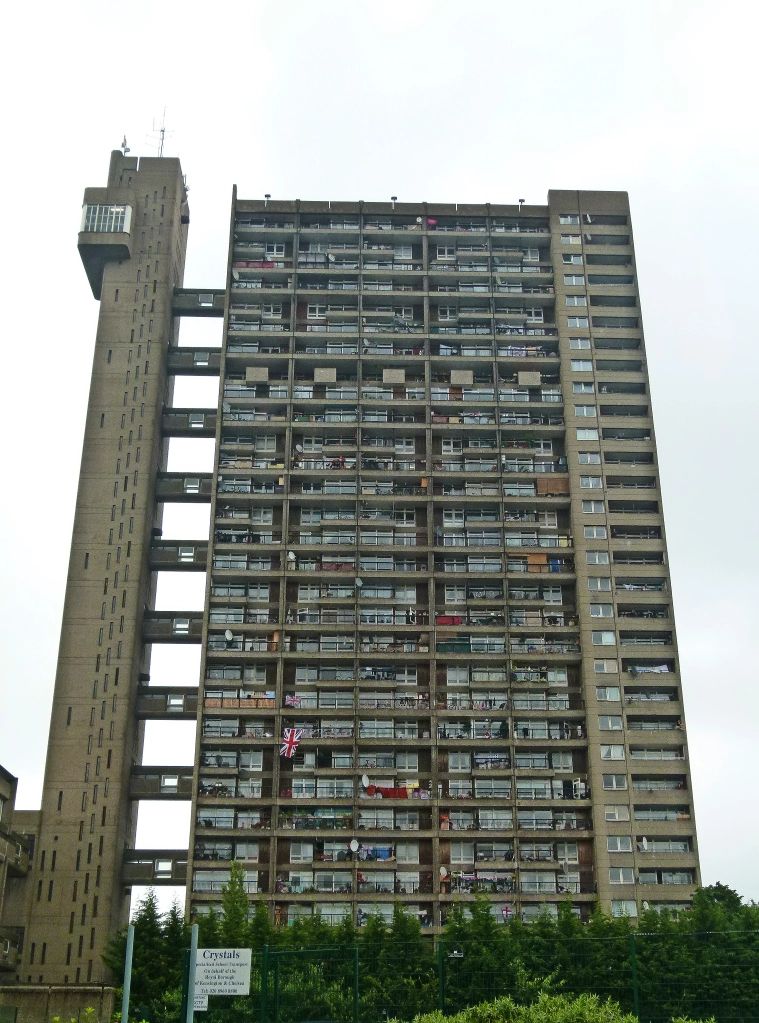
To the west of London stands Trellick Tower, an iconic building (listed Grade 2* status), which was designed in the brutalist style by Erno Goldfinger (the bond villain is named after him). It opened in 1972. It’s 31 floors high and home to about 650 people. Despite difficult early years, and thanks to millions spent on refurbishment, it’s now a popular place to live.
The top floor hot water boiler was originally designed to be heated by oil but the 1973 oil crisis forced a move to electricity, the flats have electric heaters for space heating.
How to decarbonise Trellick Tower?
Studies point out a lack of insulation and the large windows. The residents report that it’s too cold in the winter and too hot in the summer.
Its double glazing has already been updated, so the first step is interior wall insulation, which will make the rooms slightly smaller and require redecoration of all externally facing walls.
The next decision is space heating. This could be heat pumps, but we must consider that climate change may require the fitting of air conditioning in the next 10-15 years, so air conditioning units may be preferred to heat pumps.
There isn’t room for solar so residents will continue to get their power from the electricity network.
It could be chaotic, and very expensive for each resident to do this work themselves.
As with other areas of decarbonisation the solution must be a local one, and there is a clear role for coordinated planning between the residents and the local council to plan and pay for these changes.