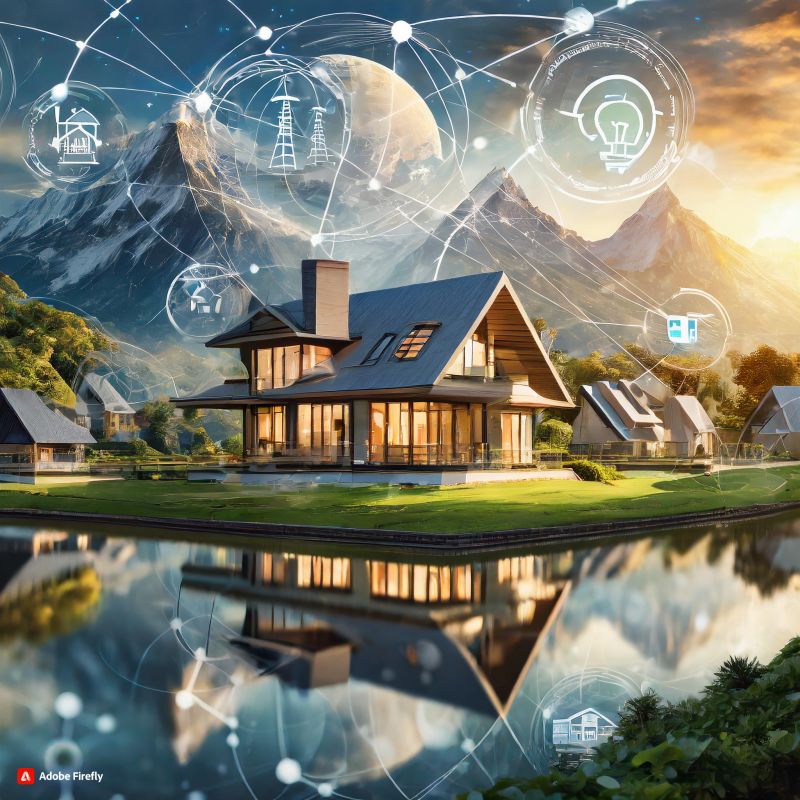
An optimised energy system needs smart homes to work with grids and markets. Exchanging energy flow, financial, and agreements data with the outside world, then making informed decisions on when to charge and what to switch on or off. This is too complex for a human to control.
How to achieve this raises many questions…
Who will design this system? If we leave it to governments and regulators it may take too long, if we let the market lead then we could create monopolies and excluded communities. They need to work together.
The tech industry is developing the Matter standard which will integrate in-home devices, we also need global grid and market standards. We need to register devices on the grid, get ready to hear a lot more about SSI.
My house has two broadband connections (for rural resilience) and I also have two smart meters (I don’t know why). The four of us also have 7 smart phones. 11 ways of connecting to the digital world – which one will we use to connect our home to the digital energy system?
Imagine the chaos if all homes receive the same signal that electricity is very cheap and all start charging their EVs and batteries at the same time, bringing the network to its knees. We need to prevent our algorithms from conspiring against us.
I’m just about ok with the idea of switching off my heat pump in February to get more Octopus points, I’m not sure I want a remote system switching off my toaster. Decisions need to be as local as possible – ideally inside the home.
There are already many examples of security holes in consumer devices. A hacker could bring down the whole country by hacking into our fridges.
The prize is a faster path to Net Zero, more engaged consumers, more jobs and new businesses, and improved lifestyles. Done badly this will be an irritation and inconvenience for millions and increase consumer resistance.