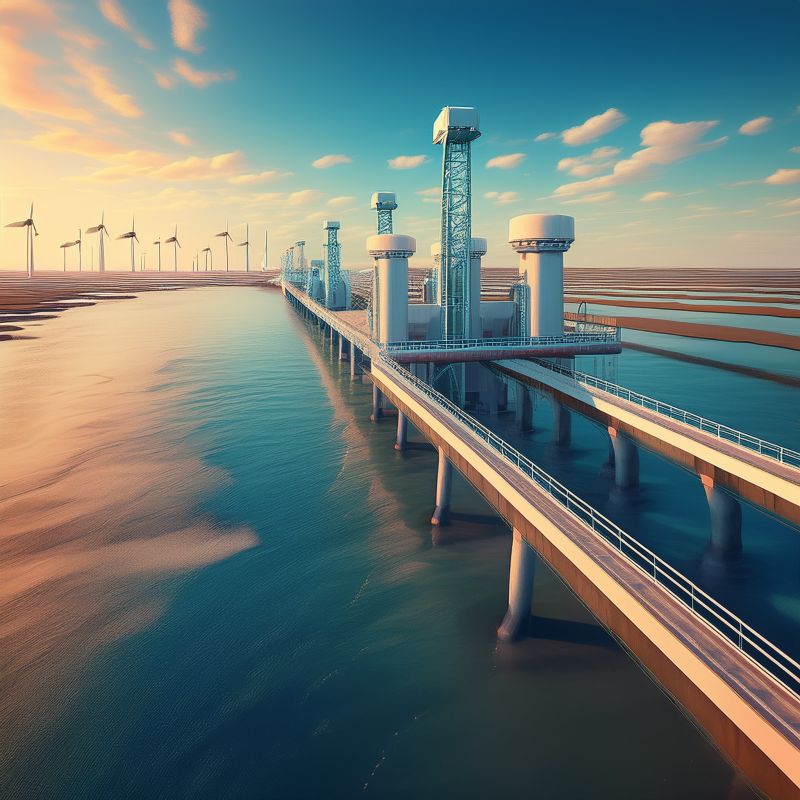
Despite the promise and the huge amounts of energy available, there only a few sizeable tidal plants anywhere in the world, the largest ones are in northern France, South Korea, and Canada.
The tides are regular, predictable and powerful. Every twelve hours vast quantities of water move in and out of estuaries. Capturing the power of this water should be a cheap and green way of driving our economy.
In 2010 the UK government looked at 5 schemes for the River Severn Estuary, which has the second highest tide in the world and therefore the greatest power, and concluded that costs were too high, and the environmental impact was too great.
There is still one large scale hopeful candidate for tidal power in the UK, the Swansea Tidal Lagoon. This was initially approved in 2015 but then stopped in 2018. Despite many attempts since then no one seems to have got sufficient momentum to get this project moving forward.
In September 2023’s the UK’s energy contracts auction five small scale tidal plants were awarded contracts at £240 MWh, three times the price of wind.
Yet the world has hundreds of freshwater hydroelectric dams that produce significant amounts of clean electricity reliably, so why is tidal different?
The engineering challenge of tidal schemes immense. The need for moving parts to be in contact with corrosive salty seawater is a fundamental difference, barnacles and sea life loves to grow on anything, silt blocks channels and causes wear on parts. Freshwater hydro dams have an easier life.
Tidal projects can have enormous impacts on local wildlife, the 2010 report predicted huge declines in animal populations as a result of the schemes.
We need to assume that tidal power sits alongside fusion as a future promise for plentiful green energy, but it’s unlikely that we will be heating our homes with the power of the Severn Bore this century.