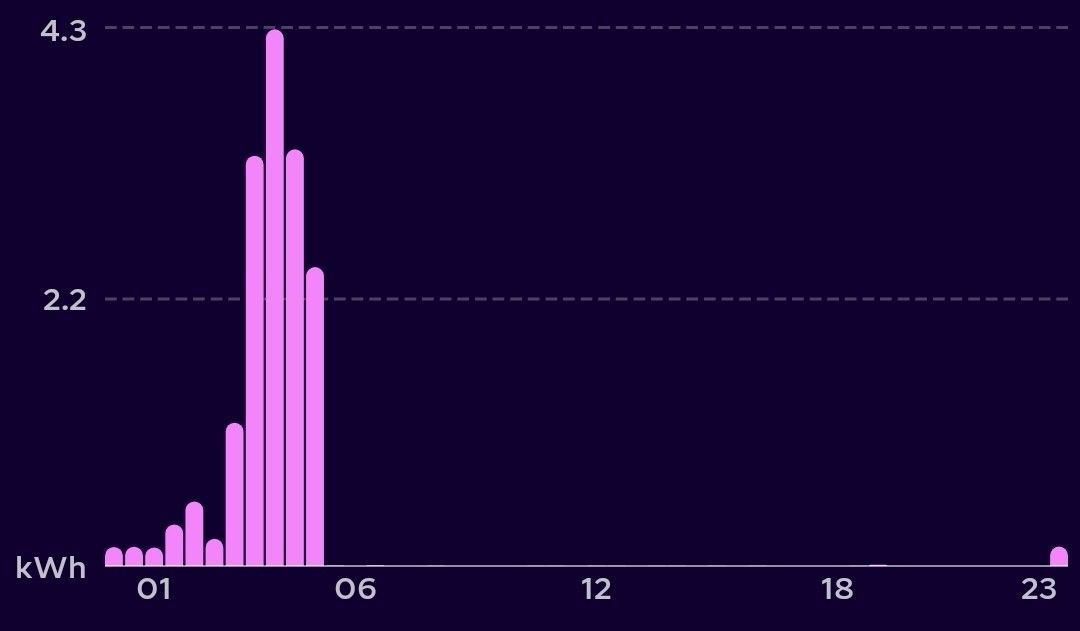
In September my home electricity use was 1,000 kWh. We got around 80% of this from the grid and generated the rest from solar panels.
About 60% of our use was general household use for items like cooking, washing machines, lights and tech. Another 20% was for charging the car which did about 600 miles in the month. We used the remaining 20% to heat our water (solar is free in the summer).
We shift the washing machine and dishwasher to run after midnight in the off-peak period. This means that our battery which has a capacity of 13 kWh can store enough power to get us through most days without importing any peak rate electricity. Our load on the local grid is therefore almost entirely between midnight and 6am.
The cost for this electricity (excluding standing charge) was £46. Had I been on a standard tariff it would have been £207. I saved £161 by shifting my demand. About one third of this was down to shifting demand and the rest, about £100, per day was down to the battery. Giving the battery a payback period of just over 5 years.
A reasonable argument is that this is just another example of an affluent tech savvy person taking advantage of the system. The argument goes that the system costs need to go somewhere and I’m dodging my share of them. If everyone did the same as me then my price advantage might disappear.
There’s some truth in this.
Only around half of our bills are energy costs, with the rest being network costs, system operation costs, the ‘green crap’, and supplier costs like metering and billing. My neighbour who is not playing the same game as me picks up a far higher share of these non-energy fixed costs. The poorer household who consume less energy pay an even higher proportionate cost for their actual energy use, particularly when the standing charge is taken into account.
In the UK we have not yet grasped the need for retail market reform and until we do this unfairness will remain and we won’t fully incentivise the mass change in consumption behaviour that we need.
My view is that a core part of this should be to move away from all bill costs being based on kWh consumption and have greater transparency and passthrough of the fixed costs of supplying electricity.