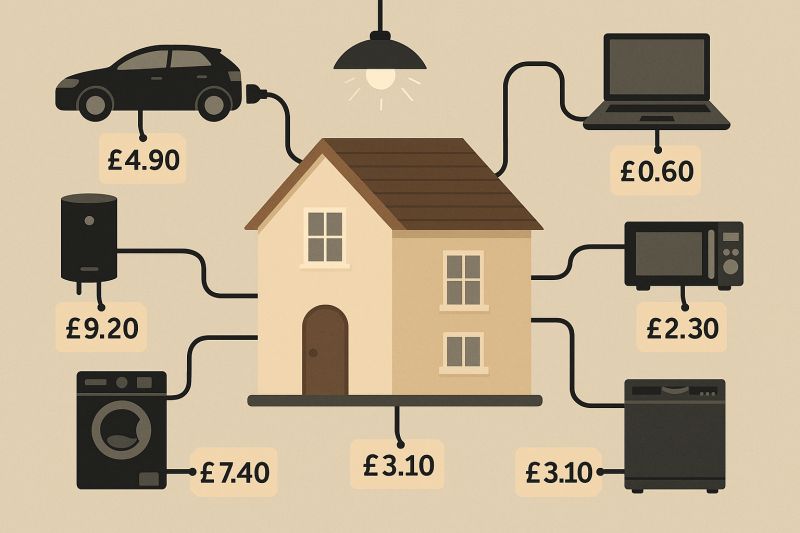
Domestic flexibility is a key component of the energy transition narrative. We get lower prices in return for allowing companies to operate devices in our home.
I already allow Octopus to decide when to charge my car, they charge me £4.90 rather than the £18.20 it would normally cost. Over this year I estimate that this saves me £500.
I don’t want to give up control of my lights, but if the returns were significant, I would be happy to give up control of my washing machine, dishwasher, heat pump, and hot water heating.
As I have a battery that is large enough to cover my daily use, and I use the very cheap overnight energy to fill my battery, so I’m less interested in giving up control. I could also schedule my car to charge overnight and then I wouldn’t need smart charging.
Would I participate in a domestic flexibility market?
If overnight prices remain at least half of daytime prices; I can make good savings by switching my load and charging into this period. No advantage to me from participating in a flexibility market. I’m guessing that this price difference is with us for the next few years.
However, if prices are more volatile throughout the day; I can no longer rely on the regularity of cheap overnight tariffs. Now it’s too complex for me to manage and I’m happy to give up control.
There may be an additional boost to me if I participate in the market, for example a much higher payment for exporting at 5pm than the 15p that I currently get. Again, I’m interested in playing in the flexibility market. But I need to be convinced that I’m getting my fair share of the rewards of participating in the flexibility markets.
The narrative for domestic flexibility and how it relates to time of use tariffs (ToU) needs to be more sophisticated. For me, ToU with a battery is currently winning the economic and emotional argument.