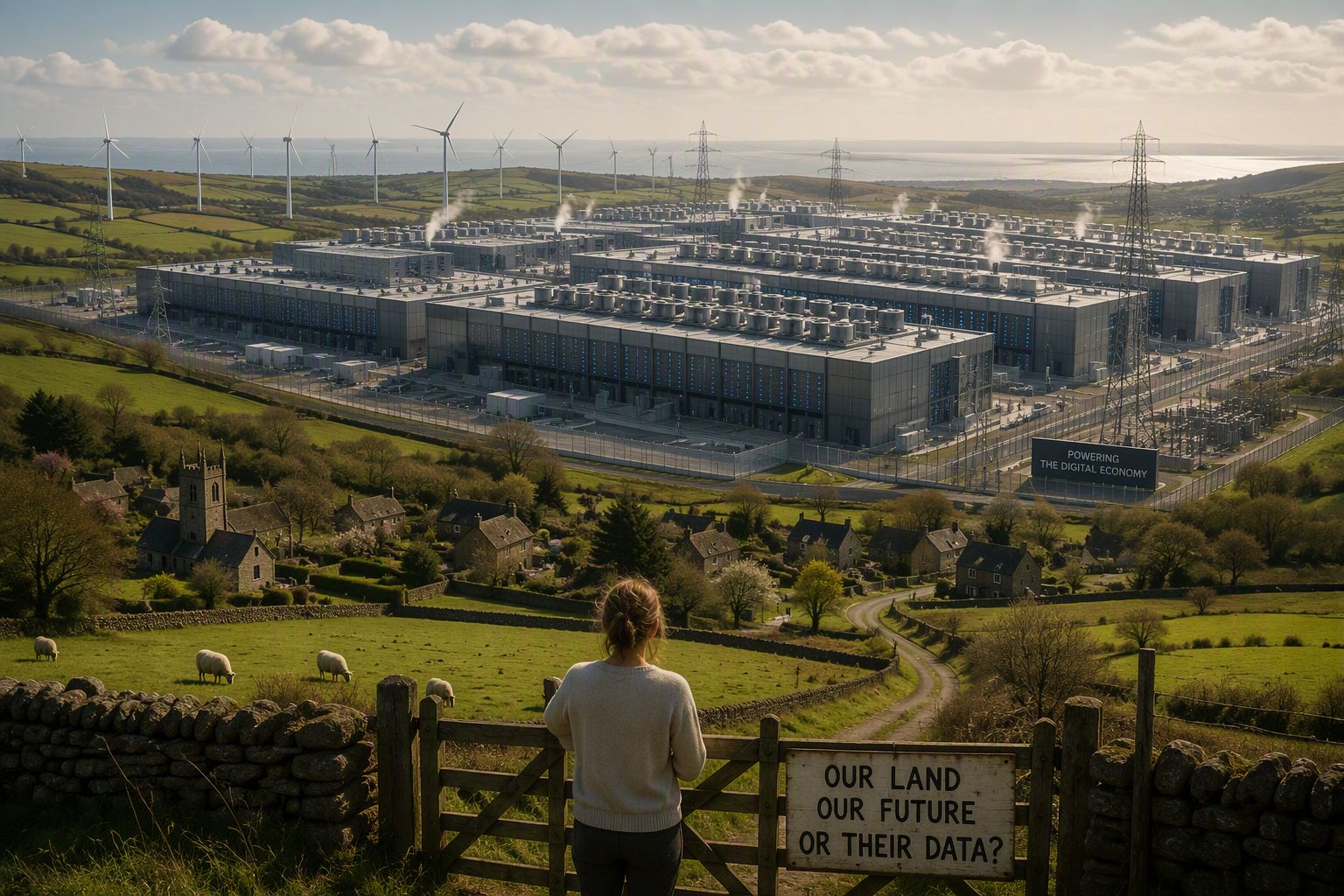
The lights will go out if we connect every data centre currently in the UK connections queue.
Around 140 data centres are seeking connections representing roughly 50GW of demand, more than Britain's current peak electricity demand of around 45GW. Thankfully, many of those projects are speculative. Even the more credible projects account for roughly 20GW, equivalent to adding almost half of today's peak demand again.
It could be argued that there's more than enough supply capacity in the same queue to counter this. But data centres get built quickly and can go almost anywhere. You could say the same about solar, but delivering 20GW of firm capacity and the supporting network will take years.
We don't have to look far to see what could happen. In Ireland, data centres consume 22% of their electricity.
Who is the capacity for?
Data centres aren't the only ones that want to get connected. We have strategic choices to make about who the new capacity is there for — should it be allocated to hospitals, factories, heat pumps or EVs?
The connections queue was designed to allocate capacity, not determine Britain's economic future. Should this be for NESO to decide?
AI and digital sovereignty are becoming strategic infrastructure for our national competitiveness. Without them we risk losing out, and if developers can build in London, Dublin, Oslo or Virginia, why should they choose Britain? The infrastructure, investment and tax revenues just go elsewhere.
Supporters of North Sea drilling say we're still using oil and gas and it's better to have our supply close to home and under our control. The same question relates to data centres.
The gas back door
Due to queue constraints many are now seeking gas connections rather than electricity. The market mechanisms for data centres connected to the gas network could be a very interesting subject to explore — gas has more capacity, but this risks skewing the electricity market further.
The UK reduced domestic emissions partly by deindustrialising. Steel, chemical and car production didn't disappear. It moved, we took the balance of payments hit, and the atmosphere was more polluted by countries with fewer controls.
Are we simply repeating the same exercise with AI if we don't find a way to connect them?