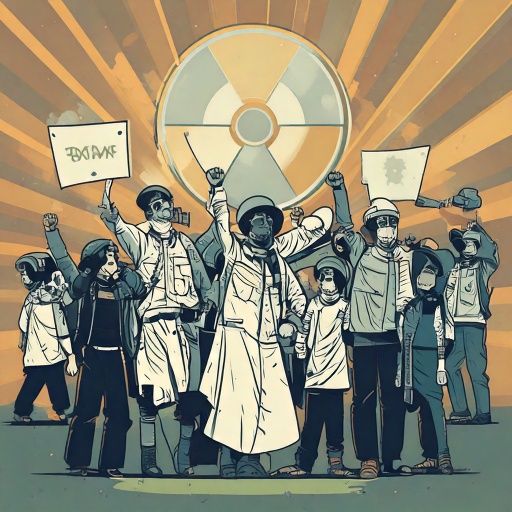
The 1950s saw the start of nuclear power, with the Russians, Americans, French and British all building reactors capable of feeding electricity into the grid. They promised modernity and electricity that was ‘too cheap to meter.’
But by the 1970s public opinion began to turn, led by groups such as Greenpeace and Friends of the Earth, and supported by high-profile people such as Jane Fonda. The public were worried by accidents and nuclear waste and Cold War fears also played a role – in the minds of the public, nuclear power and nuclear weapons were linked.
By the end of the decade, many nuclear power projects were cancelled as signing off new plants became politically toxic. Germany has now switched off all its functioning reactors, France recently connected its first new reactor in 25 years, the USA has connected 2 reactors in the past decade, the UK none. But in China, 37 have been connected in the last decade alone.
In Europe and the US, Net Zero also faces a similar challenge in winning over the public.
People associate renewable energy with inconvenience and higher prices. Why should I change my car or fit larger radiators for a heat pump? And why deindustrialise Europe if the same work is exported to China where emissions are higher?
Politicians have spotted an opportunity to be on side of the people and have started to reject Net Zero. In the UK, Reform have stated their opposition, and the Conservatives say Net Zero by 2050 is impossible. In France, the RN argues that environmental standards penalise economic growth.
Debates over nuclear power in the 1970s should remind us of the power of high-profile opposition in shaping policy. As opposition grows more vocal, advocates of Net Zero must be ready to defend it.