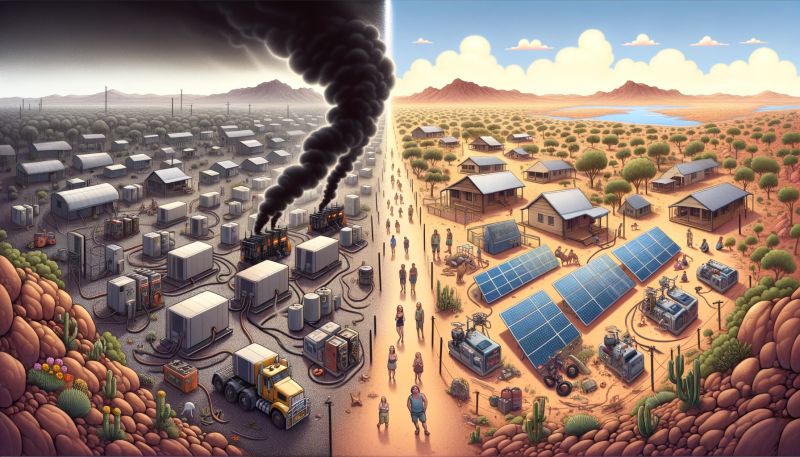
How we ensure that the energy transition is just and fair has been a recurring theme of my visit to Australia this week.
There are many disadvantaged communities in remote parts of Australia who rely on diesel generation for their electricity. It’s polluting, expensive, wasteful. We could help these communities jump right into the transition by fitting solar panels and batteries. They get clean cheap electricity and the planet benefits. Why hasn’t this been done already?
Like much of the Energy Transition the end state is clear, it’s the path to it that is difficult.
Who is responsible for plotting this path and making decisions?
There are many who would argue that use of energy is a personal choice and it’s the communities that should decide what they want. Others would argue for a government led plan that should take responsibility. Some might place responsibility at the door of the energy networks, retailers, or the companies currently supplying the generators and diesel. We need to draw a line somewhere between the individual, business and government and decide who is in charge.
Next comes the cost. It would be a lot cheaper to run a solar based system, but the initial capital cost will be many thousands of dollars, who is picking up this cost? Same response as before – we need to decide and draw a line.
And finally, can we do this quickly?
The Catch-22 here is that if we don’t engage people we will go nowhere, but if we do then it might just take too long. If you want to go fast – go alone, if you want to go far – go together. We have to engage.
This is just one example of the Energy Transition, there are thousands of similar cases in every country.