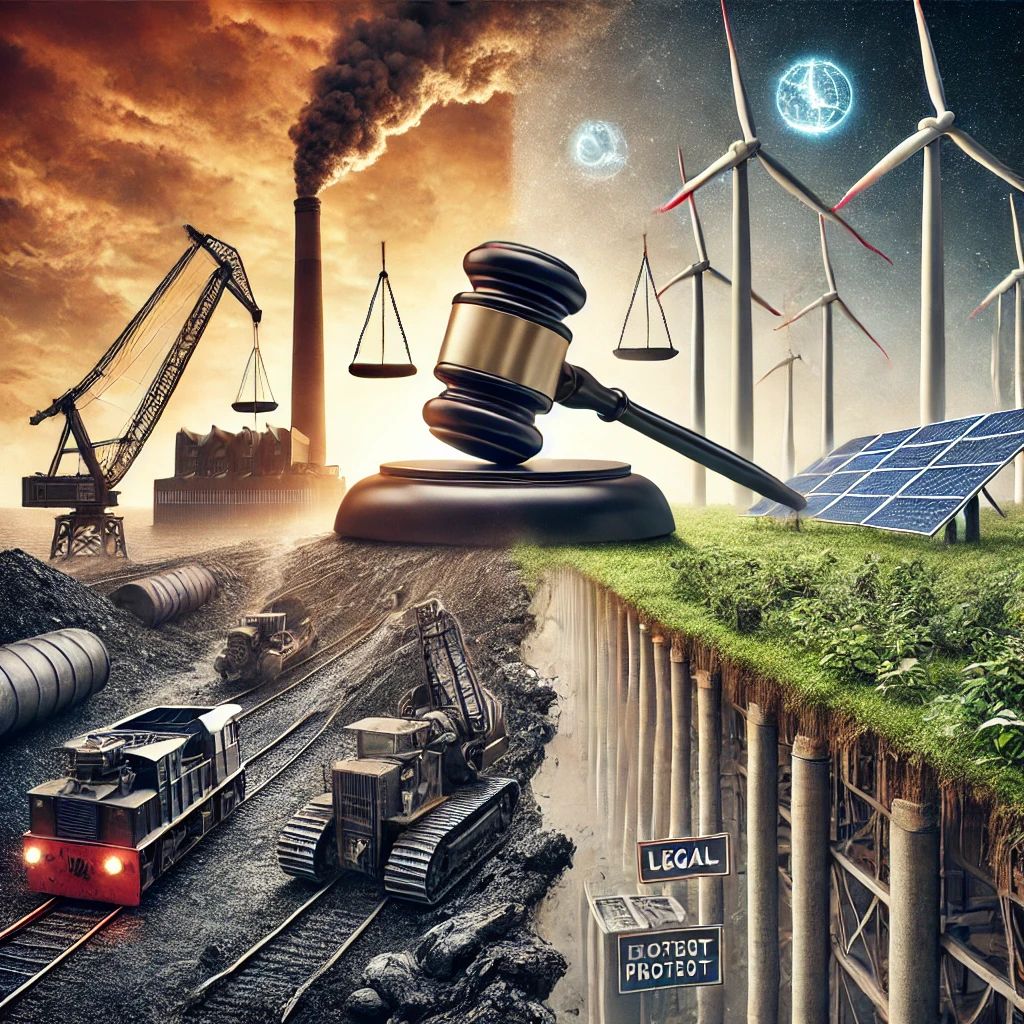
This week a UK high court judge stopped plans to build a new coal mine in Whitehaven, Cumbria in the north of England. The judge said that the case for the mine not increasing CO2 emissions was absurd. The project had been given the greenlight by the previous government, but the new government seems happy to let the project die.
There was a similar case, called Finch, that stopped oil production in Surrey, and requires regulators to consider the impact of burning oil and gas for new projects. In Cumbria, the proposed mine failed consider this sufficiently.
At the end of this month, coal fired electricity production in the UK comes to an end after 140 years. This marks the end of an industry that with coal mining once employed more than a million people.
A related case is the Rosebank oil and gas field off the north coast of Scotland. The government has said that it will not fight a legal challenge aimed at stopping it. Whilst not completely dead, as further consultation is planned, this project is going to need a lot to get it to first oil.
Where does this leave the UK?
Reducing the oil and gas we source from the North Sea means we need to source it from elsewhere. The likely sources, such as US shale gas and LNG from Qatar, are hardly climate friendly. What’s left of the UK steel industry will either import coal or shift production to greener techniques such as electric arc furnaces.
This increases the urgency of decarbonising the demand side of UK energy, which in turn needs a bold integrated vision for the future of UK energy, let’s hope that Ed has this on his to-do list.