Obviously. Taking things without paying is theft, it doesn't matter whether it’s a bottle of wine from the offy or gas from the network.
Energy theft regularly seriously injures and kills people, there are many cases where innocent people have died because of someone else’s actions – the tiny hole in the gas pipe leaks into next door, neutral gets confused for ground.
We could have a long debate on the levels of benefits, but the UK average of £424 per week which is £22k per year should be enough to cover the average energy bill of £32 per week or £1,600 per year. Well above the 10% definition of fuel poverty that many use.
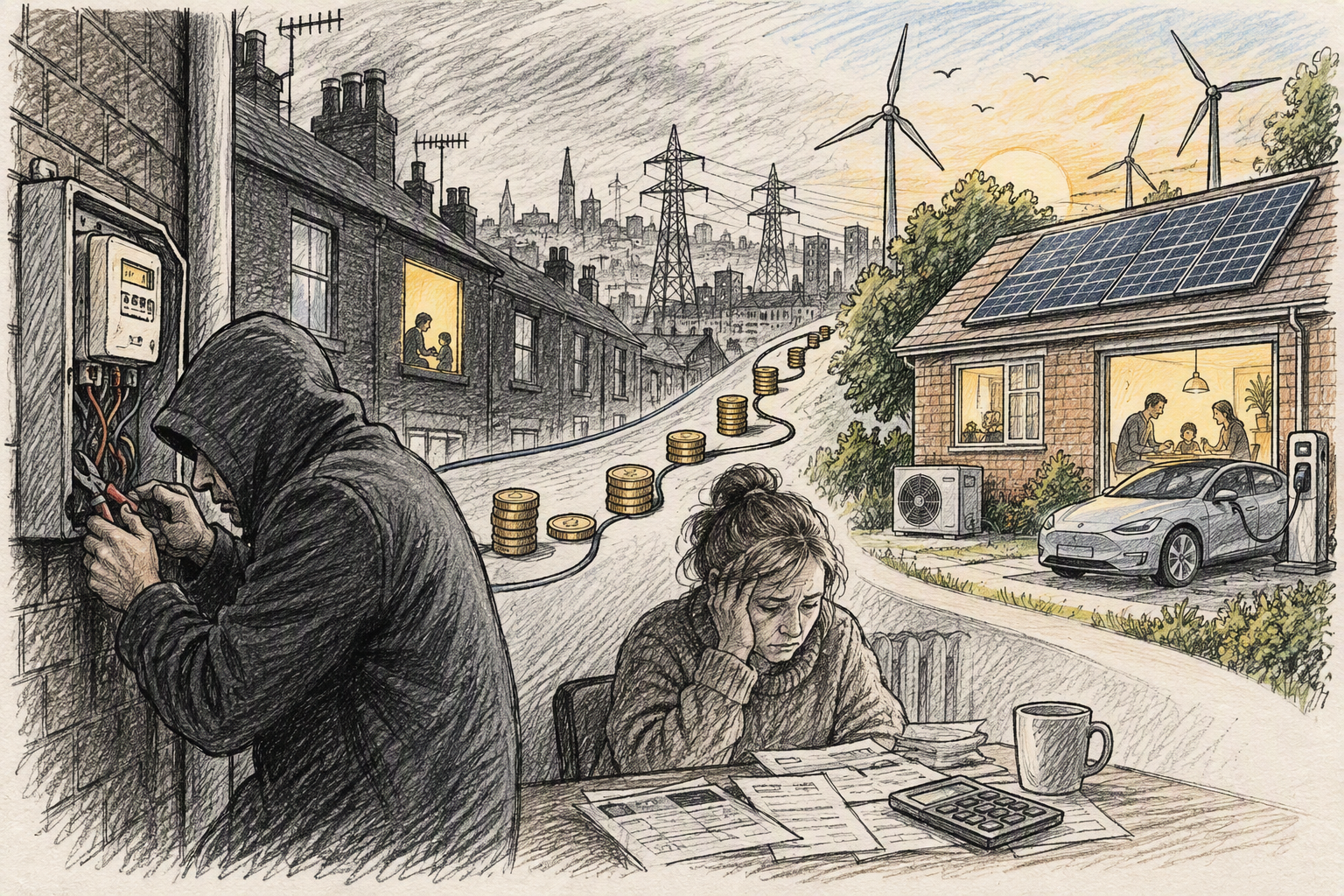
We cannot apportion all energy theft to greed. Access to heat and power is essential to life, and whilst some are fiddling with their meters to avoid payments, others are making tough choices on how many rooms to heat.
There’s a complex interplay between energy theft and debt. Whilst benefits may cover today’s energy need, there may be arrears from previous unpaid bills stacking up. Many customers move onto payment plans or prepayment meters to help manage.
We need a stronger safety net for people in this position.
The Social Tariff is a topic that I would have expected a Labour government to put back on the table. Particularly amidst of a ‘cost of living crisis’.
It must be harder than I thought to implement one.
The fundamental question for a Social Tariff is whether to fund it through taxation or sharing the cost across other bill payers. Or perhaps as we do now to fund it indirectly through theft?
Which brings us back to the overlooked topic of retail market reform. My guess is that less than 1% of the effort that has gone into wholesale market reform has gone into retail market reform.
Energy theft should always be illegal, but if we got the retail market right, we would reduce fuel poverty, debt, and theft.