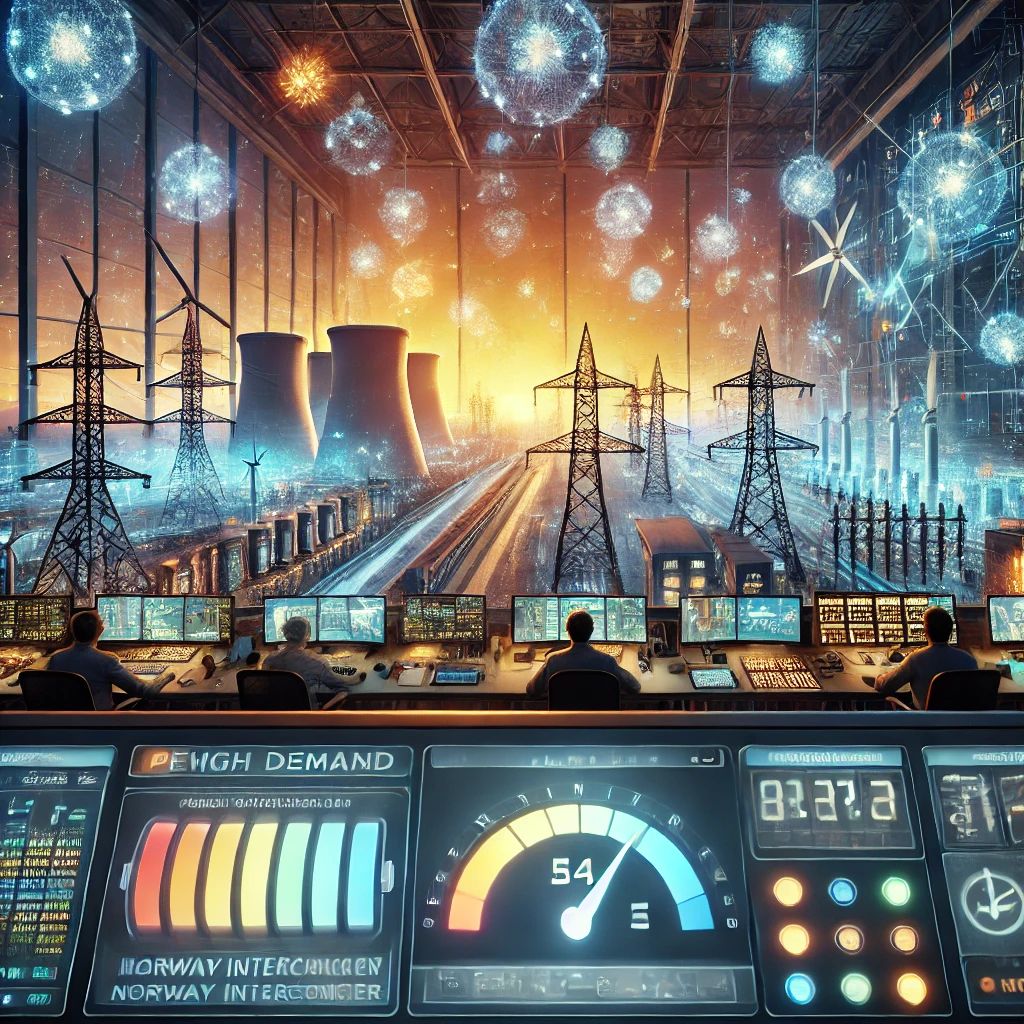
Depending on who you listen to, the UK electricity system was either completely under control or just seconds away from a national disaster on the 8th of January at around 5:30pm when the capacity on the UK electricity system reached less than 10%.
Demand peaked at 46 GW and we had spare capacity of 3.7 GW. The largest single source we were reliant on was the Norway interconnector at 1.4 GW. Other interconnectors needed to be called in to ensure we had this capacity.
If there is insufficient supply to meet demand the system automatically starts a rolling process of regional disconnections until balance is restored. When a version of this happened in 2019 the system automatically cut off parts of the train system resulting in delays of 14 hours to some people, it could be a lot worse next time.
The electricity system isn’t only a physical system, there is a near real time market that runs alongside it. The consequence of tight margins is higher prices in these markets, and NESO reported a cost of £25m for balancing the system on this day. All of this is passed on to consumers.
As the UK progressively deindustrialises, electricity consumption has been declining, so perhaps these events should be less frequent? But the change to renewables away from power that is always there like gas and nuclear could be making the system less secure.
As we electrify our lives and become more reliant on digital systems and data centres, to avoid disasters we will need to build in greater demand side flexibility and design energy markets to better reward storage.