Unless you see health benefits in cold showers it’s likely that you start your day with a warm shower. You might run a bath for the kids later, do some washing up, run a load of washing. All requiring hot water.
An average UK house with 4 people uses about 600 litres of water each day. Roughly 100 litres of this is hot water.
The water in your hot water tank is held at just over 60 degrees centigrade, this is to protect against legionella. When we have a shower, the water is about 40 degrees (mixed with cold), for washing dishes we should use the 60-degree stuff neat.
Heating 100 litres from 10 to 60 degrees, takes about 6kWh. With daytime electricity the daily cost is 26p x 6 = £1.56, if you have a smart meter or Economy 7 the overnight electricity is cost is 54p, for gas the cost is 60p (7p per kWh, at 80% efficient). A heat pump is the cheapest of at 18p.
The annual costs of this are between £570 for the most expensive single tariff electric option, to £220 for gas or night rate electricity, and the cheapest is a heat pump at £66. If you use electricity to heat your water, getting a smart meter could save you £350 per year.
Many washing machines now run on cold fill, so they heat their own water, this is 100% electric and depending on the time of day that you run could be expensive. Perhaps washing machines should have their own hot water tanks (thanks to Stephen for that idea).
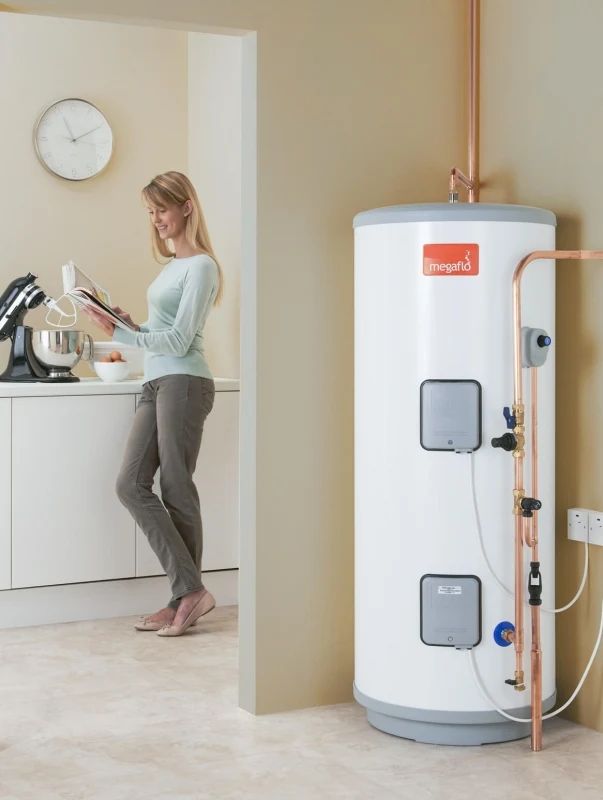
Very few new homes have hot water tanks, I see this as a big mistake. In our whole system view of energy, the hot water tank is a physical battery that provides an excellent source of flexibility which will be needed as we decarbonise. Part of the reason that new homes don’t have tanks is because they are using gas to heat and there are no time-of-day tariffs for gas, and also they take up space.
We’ve missed a trick, had we fitted heat-pumps we would have kick started the supply chain and skills, and given ourselves an excellent source of the flexibility that we will need.