As a possible future energy hub of Western Europe, the Netherlands has many advantages: It already has much of the infrastructure needed – ports, pipelines, storage, interconnectors. It has large companies with strong balance sheets. And it has a population that wants to live sustainable lives.
There have been times when the Electricity Grid has been run from 100% renewables. Yet at 87% The Netherlands’ use of fossil fuels as a source of total energy is one of the highest, most is imported. The Groningen gas field, Europe’s largest, is winding down and is planned to be closed completely later this year – which will increase overseas dependency for energy.
A big shift is needed… what to do?
For home heating there is a government plan to switch away from Natural Gas by 2050, and new connections to the gas network have been banned since 2018, with heat pumps as the preferred alternative. District heating is already well used, and this can be expanded.
Solar is the highest per capital installation of Solar in Europe, increased at over 25% last year – all good news.
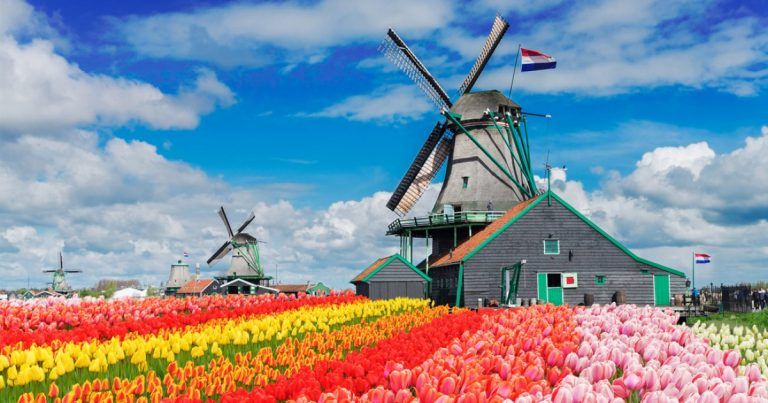
In the land of windmills, offshore wind has a huge role to play, with a plan for 11GW by 2030, this seems like an obvious choice for a country with 500km of coastline able to directly serve the industrial hubs and cities.
Hydrogen could be a major player, with the BP building a 250MW electrolyser to support the Port of Rotterdam’s hydrogen vision, Gasunie’s plan to build a hydrogen network for industry, and the Dutch government’s investment of €7bn in green hydrogen.
There is only one nuclear power station, but there are plans to build 2 more following a 2021 decision to reverse the phase out of nuclear power.
EV take up has also been rapid, the Netherlands is a leader in this respect, and alongside the country’s existing love of bikes, and great public transport, there is a very real prospect of a fast transition.
This shift will have major consequences for the electricity grid. There are already constraint issues that are preventing developments in some areas. There is a plan to double the size of the grid in the next 10 years. This will need smart control technologies to balance demand and supply and to make best use of capacity.
The bottom line is a requirement for huge infrastructure investment – in wind, solar, nuclear, hydrogen, and of course the grid that will connect everything. The people of The Netherlands will pay for this, and they need to keep their resolve as costs increase, and to maintain pressure on politicians to maintain progress.