I got back from a great two-week holiday in Vietnam, a sensory overload of food, people, cities, and millions of mopeds.
What can Vietnam, as one of the fastest growing economies, tell us about the Energy Transition?
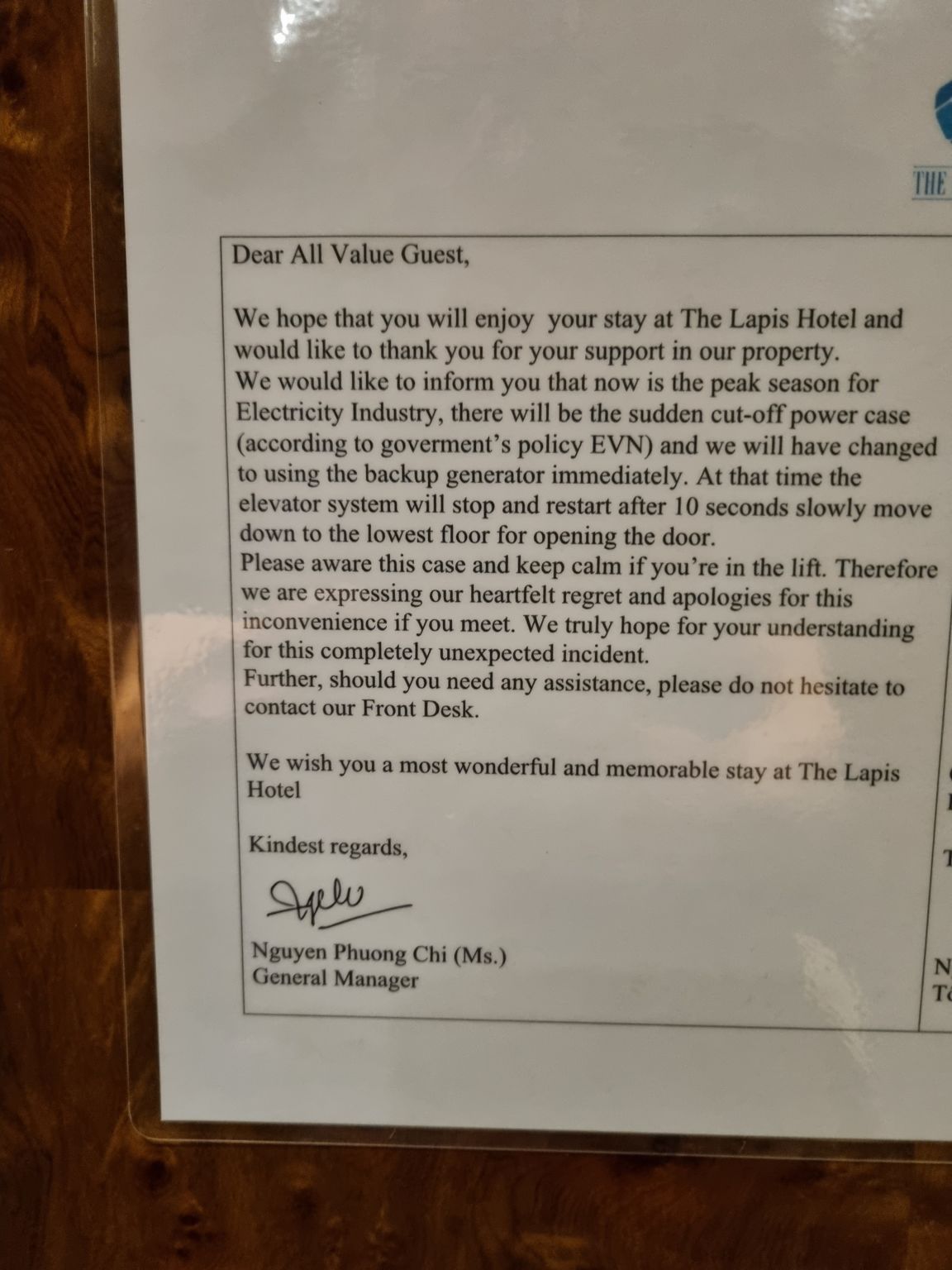
The situation report for energy Vietnam is complex – electricity is mostly generated from coal, but there is some renewable energy from hydro, wind and solar. They have good oil and gas reserves, and both export and import. AC makes life bearable in the heat and humidity but is a big draw on the grid. Power cuts are regular occurrences as the message in the hotel lift shows. Vietnam is a massive manufacturing centre and there are swathes of factories around the major cities each with high energy demands.
At COP26 Vietnam committed to be Net Zero by 2050. Vietnam has over 3,000 km of coastline, climate change and rising sea levels will be a huge issue to millions of Vietnamese people.
Can rapidly growing economies can avoid the mistakes of the developed economies and take a shortcut to greener energy? This logic is often used in telcoms – why lay cables when everyone can have a mobile? Why build coal when you can build solar?
Vietnam shows that it isn’t so simple.
Vietnam tried to incentivise solar through feed in tariffs, but this went too far and created grid stability issues. The country is therefore considering building new coal capacity.
Much of the investment for Vietnam’s energy infrastructure will come from overseas, including a $15bn deal agreed after COP27, the total cost of energy transition could be 10 times larger.
At the same time Vietnam needs to shift the use of 50 million petrol mopeds to electric, whilst most will be replaced over the next 25 years, and an electric moped can be charged from a plug, it’s still a big technology and cultural shift.
What should Vietnam do? – invest in the grid, reform markets to make inward investment attractive, lay out a clear regionalised transition plan, focus on a culture and change programme to create pull for green energy, and tackle corruption. All to be done in the next 5 years.
The picture is mostly showing telecoms lines, but above the mess there are electricity cables.