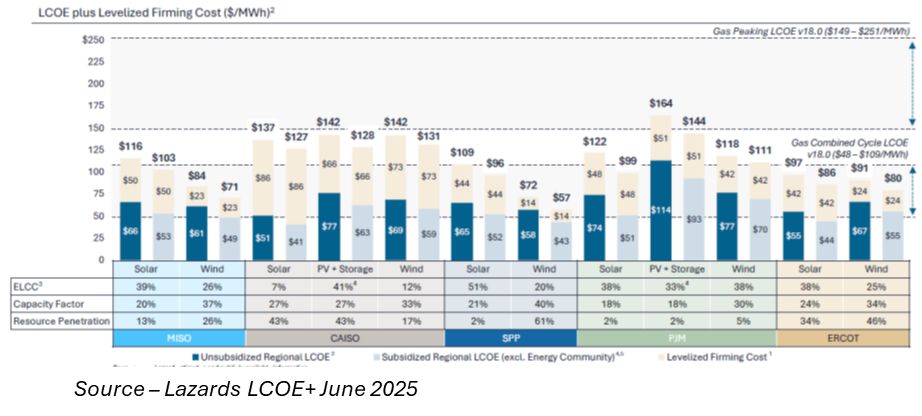
The cost of different energy technologies is often compared using the Levelized Cost of Electricity (LCOE) and is a cost per MWh. Lazard’s who originally produced this measure now produce figures that look at the whole system costs of each technology noted by adding a plus sign – LCOE+. Their latest report was published earlier this summer and has some interesting findings.
There are many who argue with Lazard’s calculations and dispute their numbers. The reality is that they are used to make investment decisions around the world and our energy policy is shaped by what they have to say.
Onshore wind without batteries is more expensive than with them. Yet around the world countries are allowing the building of wind assets without batteries, perhaps they don’t realise that this is making their energy more expensive?
An existing nuclear power station that has been fully paid for is almost the cheapest form of electricity available (pipped slightly by an existing gas plant). Extending the life of existing plants makes a lot of economic sense.
For most technologies, LCOE hasn’t changed much in the 15 years that they have been publishing the report. The exceptions are solar which dropped a lot up to 2015 but has been stable since and nuclear which has been getting more expensive since 2015. The range for wind is much the same today as it was in 2010.
The price of behind the meter residential batteries is one of the highest figures in the report. As our future system is likely to rely on the flexibility they provide, they could be pushing the overall cost of the system much higher. Perhaps we need hot water tanks in every house too?
Lazard’s calculate the cost of ‘firming’ renewable energy across US regions. Their cost estimate for firm solar in California is about the same price as the new nuclear power stations being built in the UK.
Again we face tough decisions on the future of our energy system, with price being one of the considerations, but will future generations thank us for continuing to take foreign holidays whilst not investing enough in the energy system?