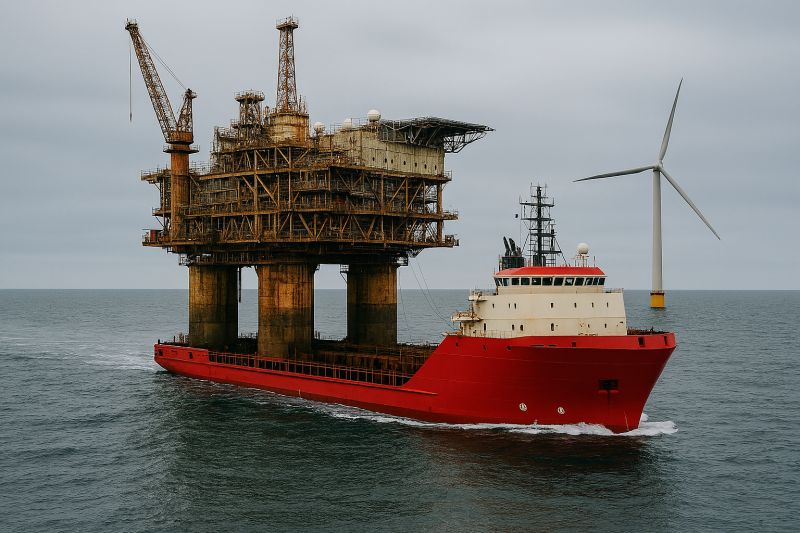
Around the UK coast there are increasing numbers of redundant oil rigs and wind turbines, they’ve done their work and it’s time to decommission them.
Decommissioning of oil wells has been ongoing for a number of years, more recent additions to the programme are the first wind turbines to reach the end of their lives. One estimate puts the total cost at £25bn over the next 10 years.
It makes sense that old oil wells are properly capped to prevent leaks (40% of the cost), but how far should we go to completely remove the steel and concrete from the seabed?
The engineering challenge is huge. The ‘topside’ of one platform in the Brent field weights 24 thousand tonnes and a specially built ship will remove it in one go for recycling onshore in Teesside. The topsides sit on very solid legs nearly 200m high having been designed to survive some of the roughest seas in the world. Sitting at the base of many platforms are ‘cells’ which are truly mammoth structures weighing hundreds of thousands of tonnes, the further complication is that these cells contain a mix of oil, sand and water, we need to decide what to do with both the cells and what is in them.
A key question is whether to remove the subsurface components or leave them in place. The working assumption in the regulations is that every last piece of equipment has to be removed. The oil industry points out that this would both be expensive and hazardous.
Campaign groups like Greenpeace are calling for complete removal. They say that even if the cells are capped, they will eventually leak, which is something that Shell also admits will happen. There are comparisons to nuclear waste handling and the need to hold the energy industry to hight standards for cleaning up.
It’s certainly true that the lowest standard we set in the UK is the highest standard we can expect elsewhere and there are thousands of rigs that will need to be removed around the world.