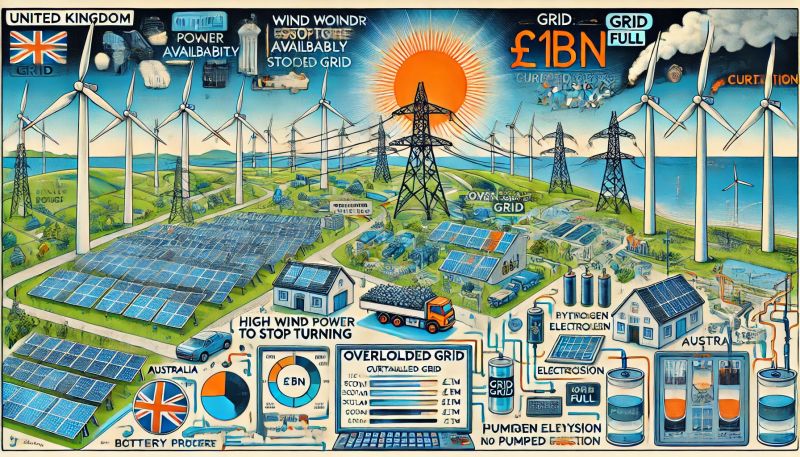
There is a seemingly crazy situation that wind farm operators are being paid large sums to turn their blades out of the wind and not generate, this is known as curtailment. The cost of curtailment is eyewatering, about £1bn per year, but to put this in perspecive it is only about £40 of the £1,800 current price cap.
The primary reason is that the link between Scotland and England has limited capacity, and we have more generation capacity in Scotland than it needs. So rather than overloading the lines we pay Scottish wind farms not to produce.
There aren’t many industries where you can get paid for something you haven’t produced. But these were the ‘connect and manage’ rules when the windfarms were built, and they underpinned the billions in investments that came into the UK to build them and were expected to stay in place for the life of the turbines. Under the Balancing Mechanism wind operators can enter a bid price not to generate, which is where the payments come from.
Zonal pricing protagonists say that as users relocate to where electricity is cheaper, they would create more demand north of the grid capacity constraint and there would be less need for curtailment. The counter argument is that relocating industry isn’t that easy, and wouldn’t it just be more sensible to build a bigger connection across the border, but do locals want this?
There are alternatives to wasting the wind: Hydrogen advocates would suggest putting an electrolyser at the base of the windfarm and store the energy until it is needed later. Battery operators would do the same with batteries. Pumped hydro storage could fill reservoirs. Greater flexibility in England would also help.
Not every country does it like this, in Australia solar generators are prevented from exporting to the grid when it is already at capacity, and they don’t get paid for it.
As the UK moves towards greater central and regional planning of its energy system, there is a hope that the planners will design in grid upgrades and put generation in the places that it is needed. How a centrally planned system and a zonal pricing will work together is an interesting question.
A more fundamental question is why pay renewable providers by the MWh when the marginal cost of production is nearly zero. An alternative would be to fund their asset investment through a version of the capacity market and take the energy for free when we need it.