“Hi anyone experiencing low lights?”
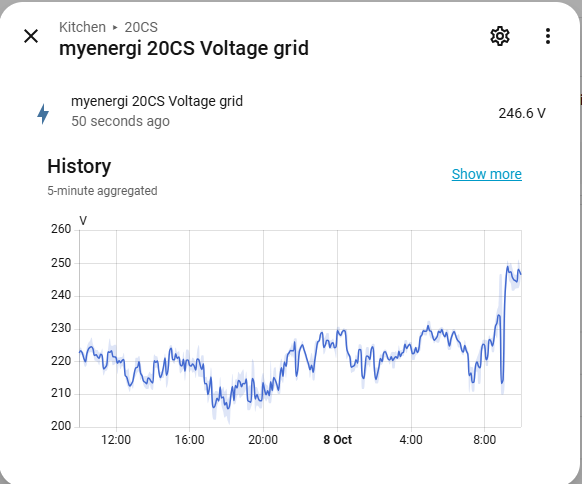
A quick check of Home Assistant showed that our supply was at 219 volts, over the next few days it slumped to 203 volts, before surging back to 251 volts yesterday. The voltage on our street is clearly not the steady level that most people would expect.
Historically people only cared about power cut but, in the new energy system, power quality is equally important. There’s every chance that any one of my heat pump, battery or EV charger would trip off to protect itself from these voltage swings.
People shouldn’t need to know or care what their voltage is, it should be an invisible part of the service.
The water sector shows how quickly a trusted utility can become a national scandal. They
made profits whist failing to invest in their networks and are now paying the reputational price for this. Activists target their CEOs, whilst the government and academics mull over ways to nationalise them.
If supply issues become commonplace the public won’t take long to look for who to blame. They won’t blame their neighbours for fitting their new devices, they will blame the energy networks for not investing in their local services.
The argument that network profits are really interest payments on loans provided isn’t going to survive what I call ‘the crowded pub test’ – ie can you explain yourself when the pub is packed, the music is blaring, and your mate asks you why you did it.
Nor will the public accept that the billions that have been spent were spent wisely.
Ofwat’s demise shows that regulators should pay attention, too much focus on measures and not enough on trust, then along came the Cunliffe report and they are no more. RIIO’s focus on network outcomes and spend could be seen as too light touch and outdated for modern challenges, which is what Cunliffe said about Ofwat.
Voltage could become the electricity industry's equivalent of water leakage: a relatively small technical issue that grows into a much bigger reputational one.