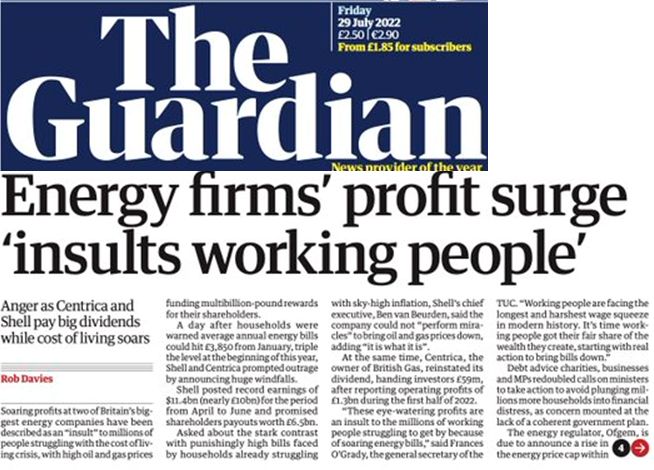
Centrica, who are British Gas’s owner, reported 2022 profits of £3.5bn, bringing renewed focus on profits of energy companies. The Daily Mirror said, “British Gas owner sees profits TRIPLE to £3.3billion as energy bills soar”.
Centrica were quick to point out that they paid £1bn in tax, and that profits from their Energy Retail business were only £8 per customer, with average bills at over £2000, that’s a margin of a lot less than 1% of turnover.
What is a reasonable level of profit to make? To answer this question, we need a better understanding of what we mean by profit, and how this relates to the energy value chain.
A simple model for the value stream – generation, transportation, and consumers, and a straightforward way to think about profit – that it should reward the risk taken.
Generation – asset building and then operations. The risk here is financing, and the need to demonstrate returns to investors. Once the asset is operating the risk profile changes. We need to reward asset builders for taking this risk. Widespread adoption of renewables could break the link between gas prices and fees per MWh generated and we will need new market mechanisms that give fair returns on capital invested.
Transportation through networks – has been a stable business delivering solid returns for many years, which reflected the need to keep the lights on. We need to encourage massive growth in networks and profit is needed to draw investors into this space.
Consumers – energy retail companies have a key role in protecting consumers from wholesale markets and ensuring that the end-to-end service works for consumers. They take market exposure risk and manage this complexity and should be rewarded for it. A bit like a supermarket measuring profits is a difficult task in high turnover business, but current returns and the number of market exits suggest it needs to be higher to achieve a functioning market.
What is the future that we want? What do we want to incentivise? What do we want to avoid? Should profits actually be higher? How should profits be taxed – is the levy a good idea? This is a key component of the future energy market design.