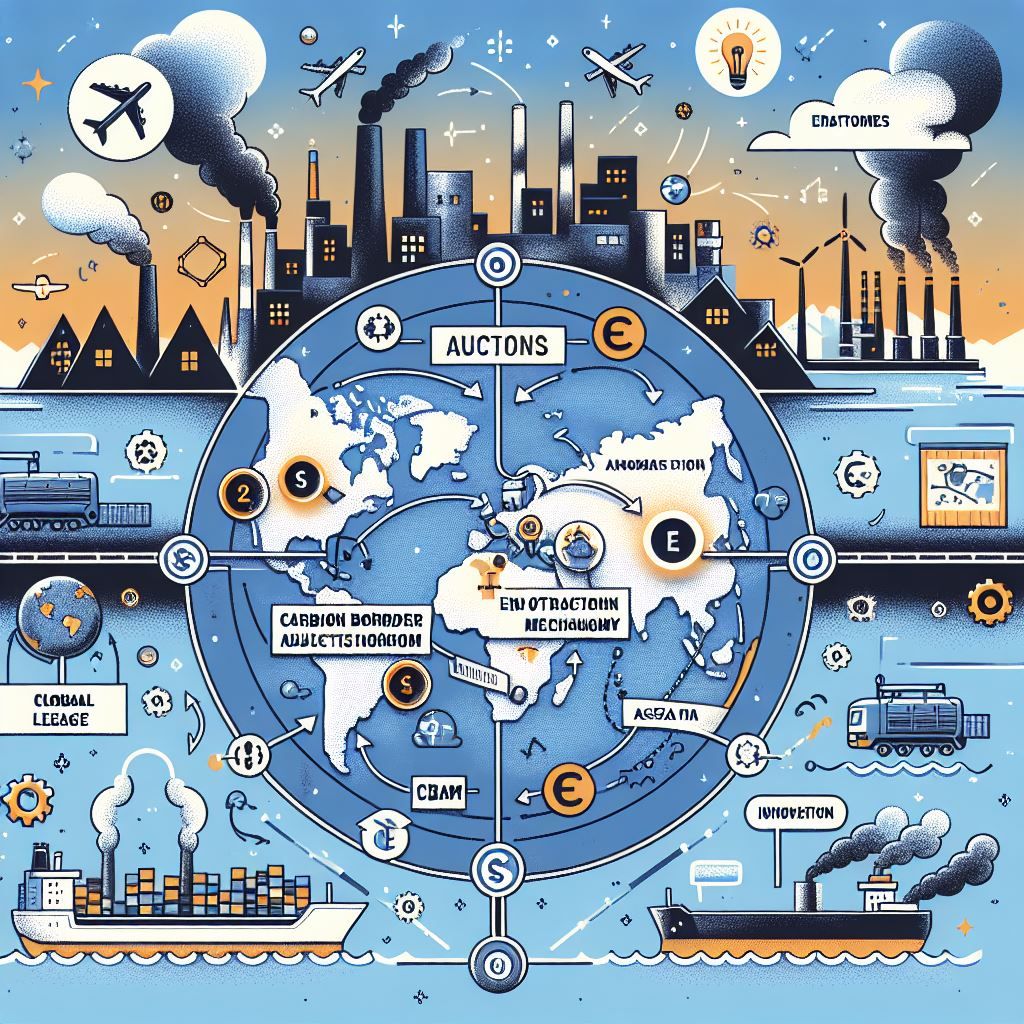
That’s certainly part of the thinking behind the European Union’s Emission Trading Scheme (ETS) which has been running for 20 years and its sister programme the Carbon Border Adjustment Mechanism (CBAM) which will be fully implemented from 2026.
The ETS is a ‘cap and trade’ scheme where carbon allowances are sold to emitters in auctions, these allowances can then be sold on through an open market, the current price of carbon is €65 per tonne. Each year the number of allowances reduces which pushes up the price, Bloomberg predict that the price will be €135 by the mid-2030s. The EU says that the ETS has helped reduce carbon emissions by 47% since it started.
The CBAM seeks to extend the ETS mechanism to imported goods. European deindustrialisation has moved production and carbon emissions to Asia, this process is often referred to as ‘carbon leakage’. Importers will need to buy CBAM certificates, if the carbon was already taxed in the source country, a refund can be claimed.
The world is a very complex place, with very complex supply chains, where components like the GPU chips in a Tesla might be assembled in China but have been produced in Taiwan, to a design owned by a US company. Tracking carbon though this system is hard.
Why would we want to make life more expensive in Europe than the rest of the world? This could accelerate the closure of European manufacturing, or on the contrary it could accelerate Europe’s sluggish innovation culture as we seek lower carbon solutions.
In the UK, the £32bn of tax revenue that a fully implemented scheme like this could raise could be reserved (hypothecated) to meet the required level of investment to meet Net Zero by 2050?
Perhaps we should have stronger regulation rather than allowing and then charging for emissions?