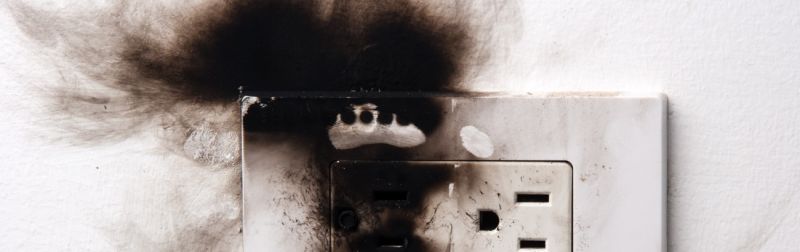
The electricity connection into my home is protected by a 60-amp fuse. Which means the most that the house can draw before blowing the fuse is 13 kW.
This is enough to charge my car, run the heat pump, and cook dinner. The reality is that we never get anywhere close to this limit and the real-world peak use is more like 6kW – roughly half of the available capacity.
My home wiring is unlikely to be an issue with a green energy transition.
But what if my neighbours also have EVs and Heat Pumps, when does the local grid become the bottleneck? Local Transformers are sized on an average of 2-3 kW per house (and for higher peaks), so once most houses in my area switch to electric and draw 6kW there is a possible issue.
A 2022 UK Government report identified many options of how to improve the capacity of the local grid without installing new cables: For example, cooling transformers so that they can handle more power, and technical solutions that change the transformer dynamics, use capacitors, or change the power phasing.
We could allow the network to run hotter. A typical distribution wire is heated to about 50 degrees by the electricity passing through it, what if we allowed it to rise to 80 degrees or more? Perhaps the birds wouldn’t be too happy if their feet were scalded rather than warmed?
Much of the low voltage network is dumb with no real time sensors, and we need better monitoring. These would help us make better decisions on where needs reinforcement.
Longer term the shape of grids could be changed from the ‘centre out’ model we have today to a mesh where there are multiple routes to the same area allowing better load balancing.
The behaviour of the homeowner in flattening loads can be a huge help, but as problem isn’t in the home, we will need to financially reward people for their role in providing flexibility, whether through shifting their demand or installing batteries.