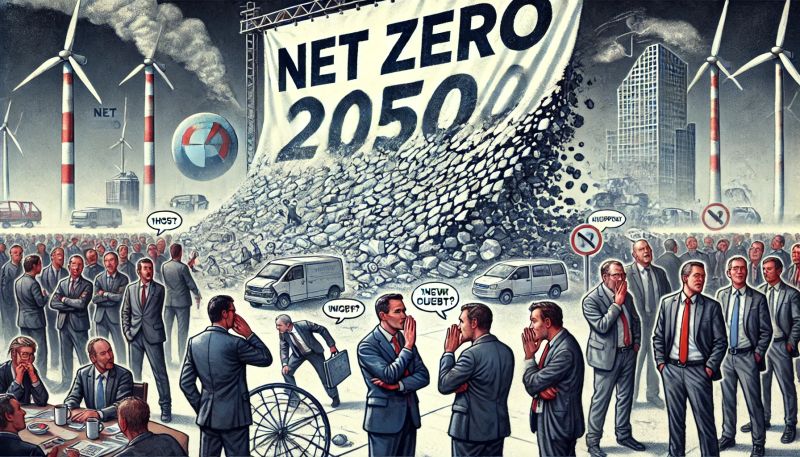
Projects need dates, without dates people lose focus, and ultimately the project fails. But what if those deadlines lead you to make suboptimal decisions?
Net Zero means not producing more CO2 than you are removing. It allows for carbon capture and offsetting, like planting trees. The Paris Agreement requires signatories to produce plans known as Nationally Determined Contributions (NDCs), while the Enhanced Transparency Frameworks and Global Stocktakes track each country’s progress.
24 countries have made laws that commit themselves to net zero at least by 2050, that’s in 9,641 days’ time. It’s highly unlikely that they will make it.
We are being led by a target that most people privately admit we are not going to meet. It will also lose credibility as the challenge of meeting it becomes harder to deny.
This target means that we aren’t making the climate adaptations that we will need. We are chasing carbon abating technologies rather than fundamental solutions to the hard to solve areas like manufacturing, shipping, steel, aviation, concrete, under the banner of Net Zero by 2050.
It also means that we may be making some poor decisions, In Australia, some think that because nuclear won’t be ready for 2050 it shouldn’t be developed, despite potential benefits in the second half of the century.
We should focus on what we can achieve with the technologies that we have already have. We should also have the enablers in place – electrification, consumer engagement, international cooperation, legislation, and taxation, that will help us fix the tough problems. We should have an honest conversation with people about where we really are.