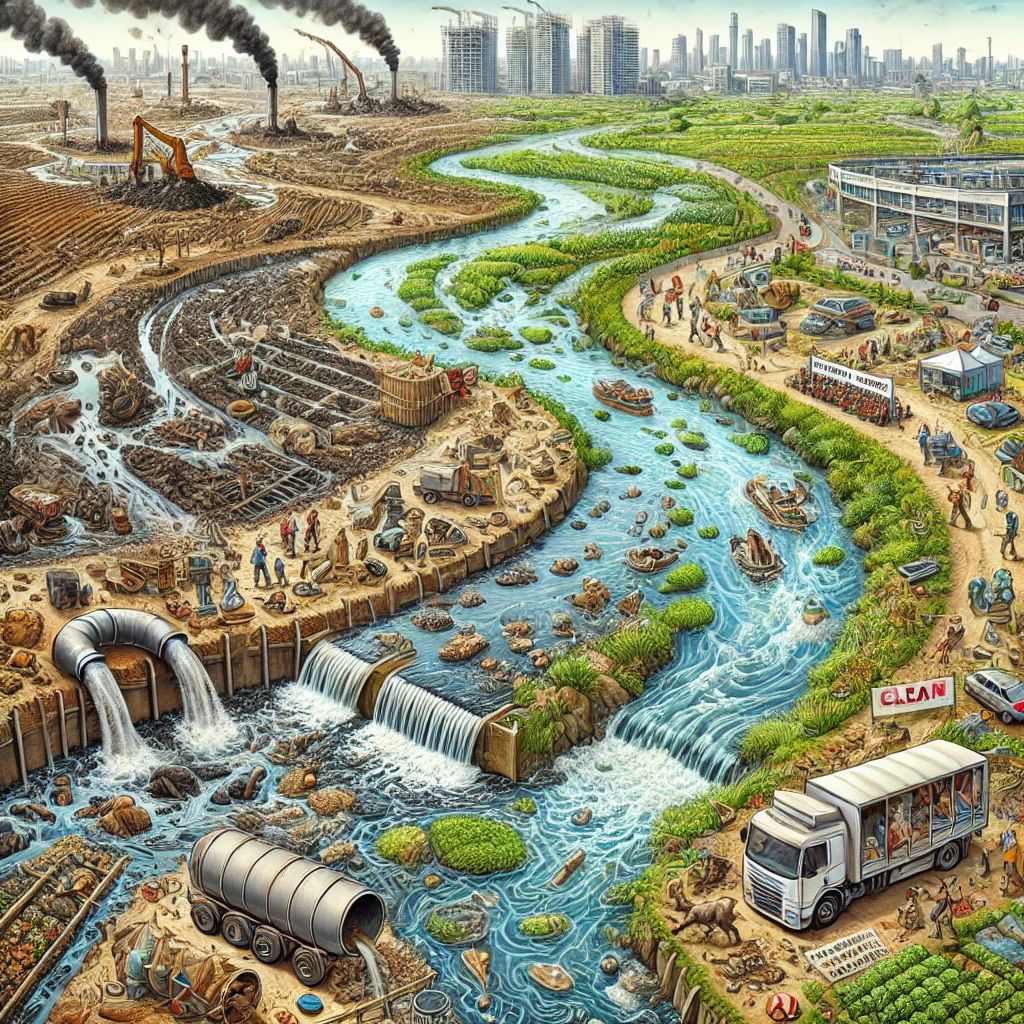
The sorry tale of the Seine through the Olympics shows the challenges that most nations face when trying to clean up their rivers. The French government spent €1.4bn on facilities but there were still very high-profile delays to the open water swimming events.
In the UK, Labour has promised to put water companies under special hmeasures and give regulators new powers through the Water (Special Measures) Bill. A key measure in this bill seeks to ensure that revenues earmarked for infrastructure projects are used as intended, and if not used, are returned to customers rather than shareholders.
This isn’t quick enough for long-time campaigner Fergal Sharkey, who plans a rally on 26th October to coincide with 100 days of the new government, and just before its first budget.
Yet many commentators agree that the solutions to the current problems will take decades and many billions to implement. This makes setting up the right governance and regulation an immediate priority.
We can’t just blame the water companies, change also is needed elsewhere.
At harvest time, farmers often spread manure on their fields to increase their nitrogen content as an alternative or supplement to using artificial fertilizers. In theory this is better for the environment, but not if it rains and that manure is washed into rivers.
For new housing estates, it’s much cheaper to connect to existing sewage networks than to put in their own treatment works, adding to the network’s load. Many of these new estates are also built on flood planes – how many estates are called ‘something meadows’? When covered in houses, flood plains work less effectively in slowing the flow of water through treatment works, meaning more sewage enters our rivers.
In the short term, effective governance and regulation could alleviate these issues, but we’ll also need significantly more investment.