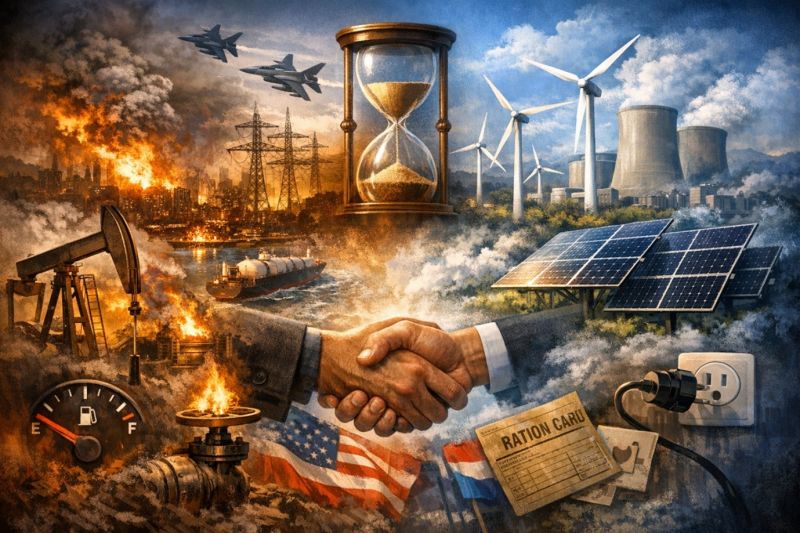
We fight wars wherever fossil fuels are extracted, shipped and refined. Energy crises have led to huge economic issues, many have shaped the way we use energy today, more fuel-efficient cars, to the acceleration of North Sea oil and gas, to France’s nuclear programme, and in the 2020 energy crisis all European countries spent billions reducing bills.
There is a long history of similar crises going back to the first Oil Shock in 1973, the Iran-Iraq war from 1979, the Gulf Wars from 1990. They occur fairly regularly and it’s rare to go 10 years between them.
One answer is to remove the fight over control of resources by reducing our dependency on fossil fuels. We aren’t doing this quickly enough; we’re hooked on a fossil fuel enabled lifestyle – that holiday, that car. Our progress on greening electricity is a very small percentage of overall energy use – it’s not the fundamental shift we need.
Another answer is to rely on our own resources, ie the North Sea. Critics of this argument point out that our oil and gas are traded on global markets and having them close doesn’t make them any cheaper. But security of supply is the key consideration and the 2023 Energy Act gives Ed Miliband powers to direct North Sea operators to ensure security of supply to the UK.
Rationing has been used as a last resort many times. The three-day-week in 1973 was an example, and other countries have used rolling blackouts, Australia alternated the days on which you could fill up your car.
A key part of any future has to be Bilateral deals with friendly nations. It’s no surprise that ministers are spending a lot of time in Oslo.
Unless this war ends soon, we will have to do all of the above.