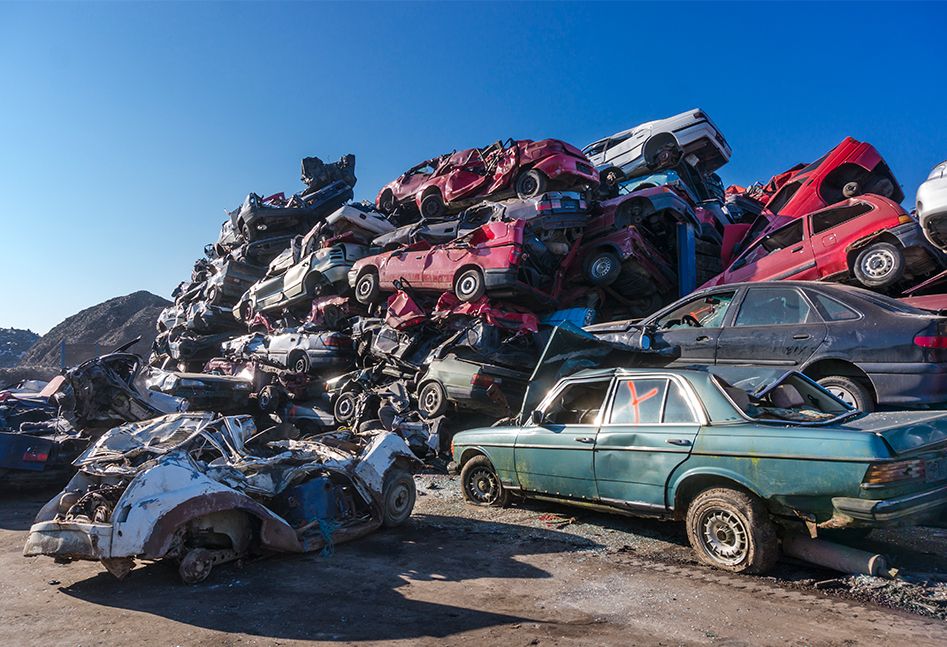
If a car lasts 20 years, then we need to replace the entire world’s stock of cars every 20 years. If a pair of trainers lasts one year, then we need to replace the entire world’s stock of trainers every year.
There are some items where we need on average to replenish the world’s supply every day – like food and transport fuel. Whilst we can store some of these items demand is so huge that the reality is that production meets supply on a daily basis.
What does this mean for energy conservation – we should consider how much energy is used in each of these processes and identify where are the greatest opportunities.
If I replace my car about once every 4 years, but it has a life after I have used it, so let’s go with the 20 years from above – I need to account for the 5% of its lifetime energy use over the 4 years that I have it – so I’m responsible for 20% of the build energy costs. Keeping your diesel car instead of getting an EV makes no difference, the way to make a difference is to make your car last longer.
My house might last 300 years, so every year I live in the house I need to account for 1%. Unfortunately, there are many houses and buildings (like the office that I work in) that have much shorter design lives and we might only get 50 years use from them.
To find the heavy uses of energy we need to look at what we do use every day. Fuel for our daily commutes or taking the kids to school, the food we eat and its packaging, are the ones that have the highest net energy use. It will be the every day changes that make the biggest difference to world energy consumption.
Send your kids to a school that they can walk to, sorry I didn’t and it’s too late as they’ve now left school. Eat unrefined, unpackaged foods. Extend the life of your car. Build for 300 years and not 50.