Following on from my review of British political party’s energy policies last week I thought I would do a deeper dive into the Green Party. Does their energy policy make any sense?
Their policy objectives cover decarbonisation, democratisation, decreasing usage, demographic change, local policies. Very clear and very sensible.
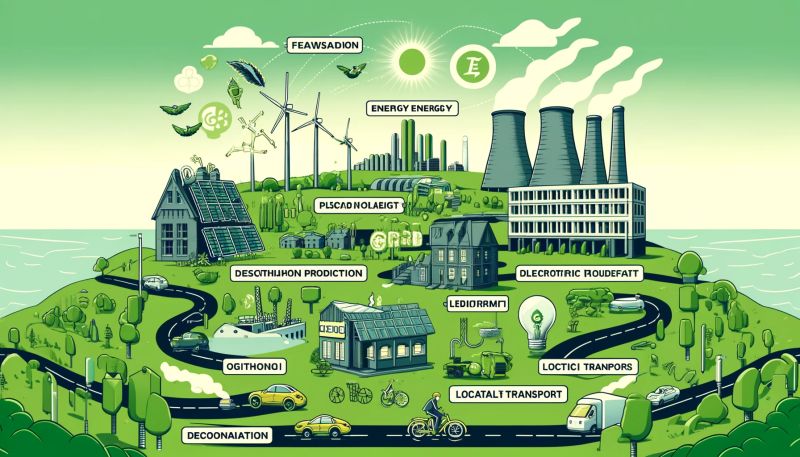
Massive increases in renewables energy are headlined, they see a role for CCUS, but want to phase out nuclear. They also want to phase out coal, but this is happening anyway. Hydrogen will be green not grey. Buildings will be refurbished, built better. Natural gas will be phased out. People will walk more, and most forms of transport will be electrified.
There is very little on social wellbeing and fuel poverty, other than the provision of grants. They are strong on regulation and have a suite of domestic and international initiatives. They are also in favour of market reform.
They plan to pay for this through a higher carbon tax, increases in general taxation, and some vague ideas such as ‘financial instruments’.
My initial reaction is that there is a lot to like here, they could say more in some areas, but it’s comprehensive.
The lack of numbers in the Green policies is worrying – no Pounds and no Watts. The energy system needs both the physics and the finances to work in harmony. With no quantification of how they aim to balance demand and supply and pay for it there is no realistic way to assess the realism of their plans – we know the chaos that results from even small energy shortages.
They are being honest that the general pubic is going to have to pay more, they are avoiding the beartrap of saying that big business or the government will pay for everything.
And whilst the anti-nuclear stance is unsurprising, it would be unpicked if they provided numbers for how they see the economy running without fossil fuels, it’s just not possible without nuclear (and batteries – which are equally expensive and arguably worse for the environment).