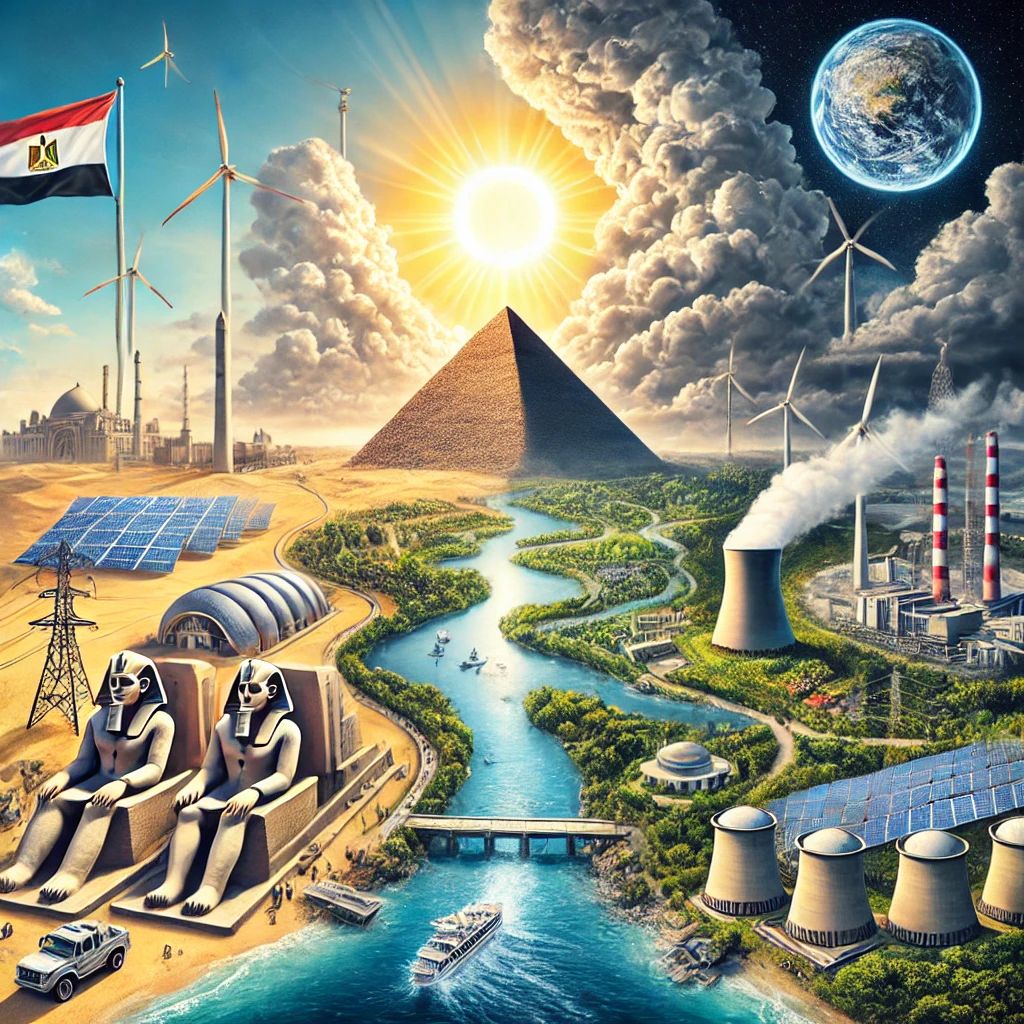
The sun bakes down on the pyramids in Cairo and steady breeze blows up Red Sea the towards Sharm El-Sheikh. But this country isn’t yet making sufficient use of either of these natural advantages to decarbonise.
Egypt is almost 90% reliant on fossil fuels. It produces all that it needs and is a next exporter of oil and gas, for which it makes good money.
But green energy has a long history in Egypt. The great Aswan Dam project was completed in 1970 and is one of the world’s largest hydroelectric plants, it generates 10 TWh per year, similar to a nuclear power station. It created Lake Nassar, which is so large that it took 6 years to fill. Egypt is also building a nuclear power station to a Russian design on the sea to the northwest of Cairo, which will also have desalination capabilities to provide fresh water.
The government has set an ambitious target for renewables of 42% by 2035, and some projects are operational with others planned. Huge investments are still needed to make this achievable and the European Union has committed funds, but the numbers are nowhere near the billions that will be needed.
It is a complex region. All three countries that border Egypt - Israel Libya, and Sudan, have their troubles. Investors look for security, and the threat of war isn’t going to bring in external funds.
Higher up the Nile, Ethiopia is building its own dam. Tensions are running high with Egypt over the rapid filling of the dam reservoir which could reduce the flow of water to Egypt where it’s needed for power and irrigation. Military intervention by Egypt is looking possible.
Insufficient investment in green technology, wealth built on oil and gas, and a complex geo-political environment, are familiar hurdles in the transition to net zero. Egypt, like many others, must find a way to navigate these challenges to secure a more prosperous and greener future.