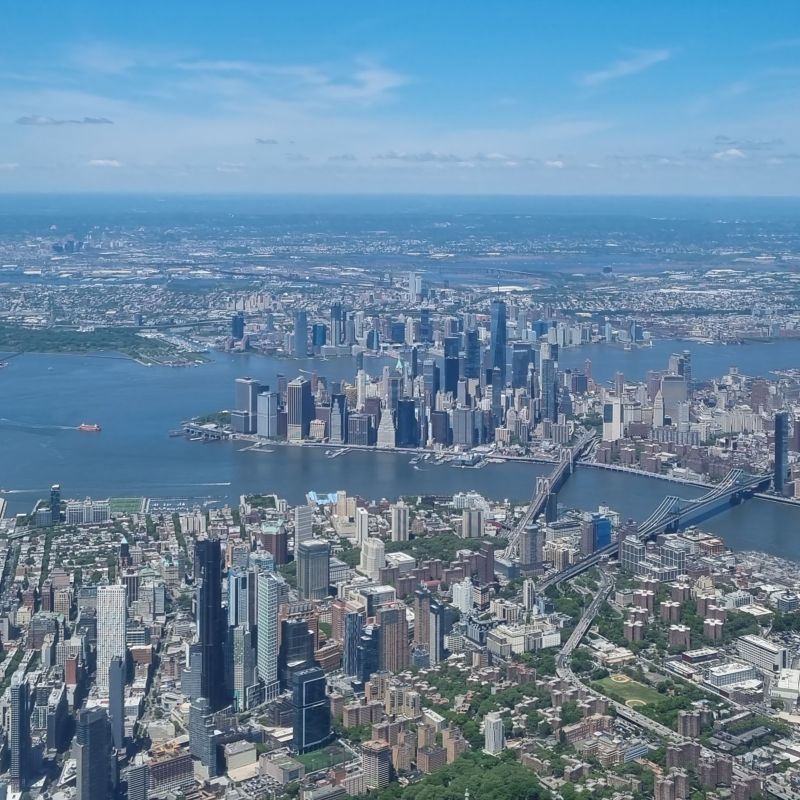
I’ve just got back from a trip that included New York and Houston, which got me thinking about cities. Over half of the world’s population lives in cities. We know that people are the key to decarbonisation, so how can we decarbonise cities?
The density of people and the lack of space mean that the easier decarbonisation options of solar panels and wind turbines are not easy to install.
We need to be clear on our definition of cities. There are the downtown business districts with high rise blocks, but most of the land in cities is the suburbs. It’s likely that we need different answers for both.
What can we do?
The density of city housing makes community heating, water, and cooling systems viable, meaning that we can be more targeted in decarbonising the central boiler rather than 100 individual homes.
Urban planning and building standards have a huge role to play. We can mandate efficiency, build in renewable sources, make use of waste heat (previous post on this).
We could extend the idea of the green-belt that surrounds many cities to mandate a solar-belt where sufficient land is put aside to power the city.
Transport is low-hanging fruit for decarbonisation, battery busses, electric trains, charging for fossil fuel vehicles is already well underway and should continue.
Dense central districts should be subject to the most stringent rules on energy use, they will always be net energy importers and we need to make sure that their demands can be met cleanly.
Individuals living in cities feel helpless to make these changes. One person alone will not make a significant difference. There is a theme from many of my posts on the need for greater government vision and direction. Decarbonising cities needs central government to work with local energy planners (last week’s post) to achieve this.